
Bike Case Reviews for Bromptons
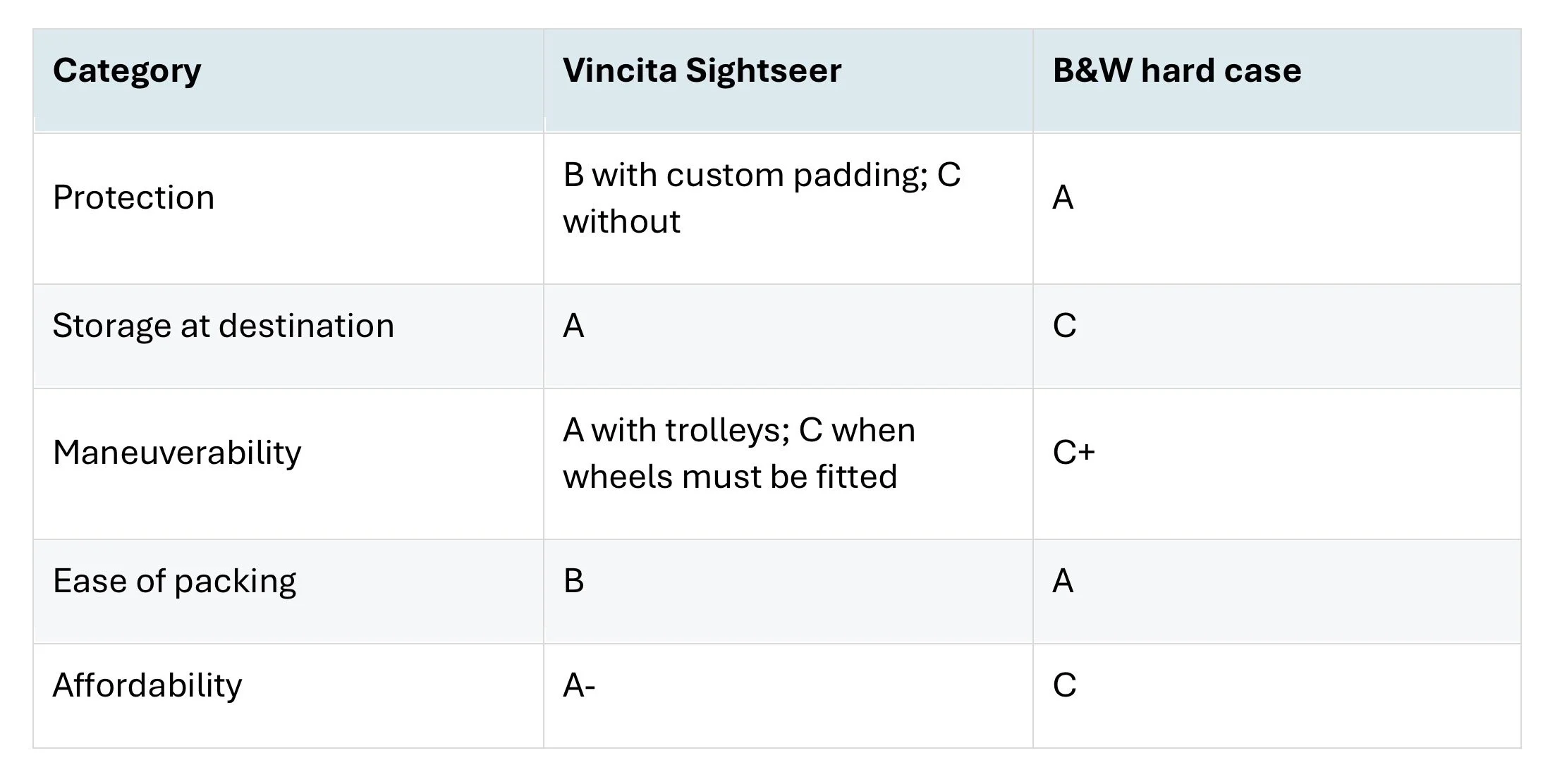
We have flown with our Bromptons in two very different cases: Vincita Sightseer padded bags and B&W hard-sided cases. Neither is best for every trip. The choice comes down to how much protection we want in transit and how much bulk we can manage after we arrive.
At a Glance
Vincita Sightseer soft-sided bag
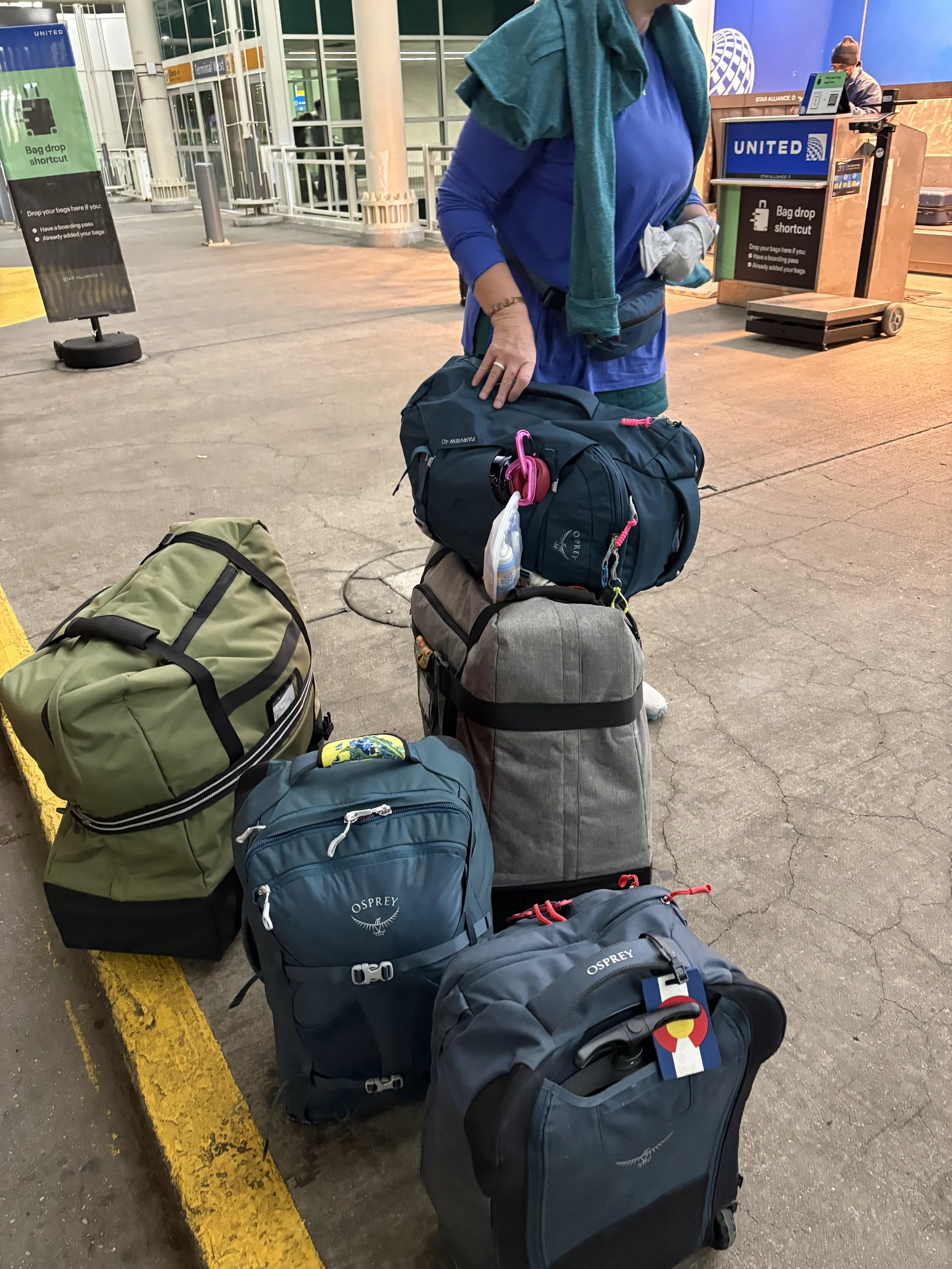
The Sightseer’s greatest strengths are its light weight and collapsibility. Once the bicycle is removed, the bag folds relatively small, which matters in a hotel room, apartment, cruise cabin or rental car. It is also considerably less expensive than the B&W case.
The trade-off is protection. The bag is padded, but it has no rigid shell, so the folded Brompton itself must withstand much of the pressure from being moved, stacked or dropped.
The Zipper Problem
Our most serious Sightseer damage occurred when the zipper lay directly over the Brompton’s handlebar folding joint. Pressure on that hard point destroyed several zipper teeth, and we eventually replaced the bag.
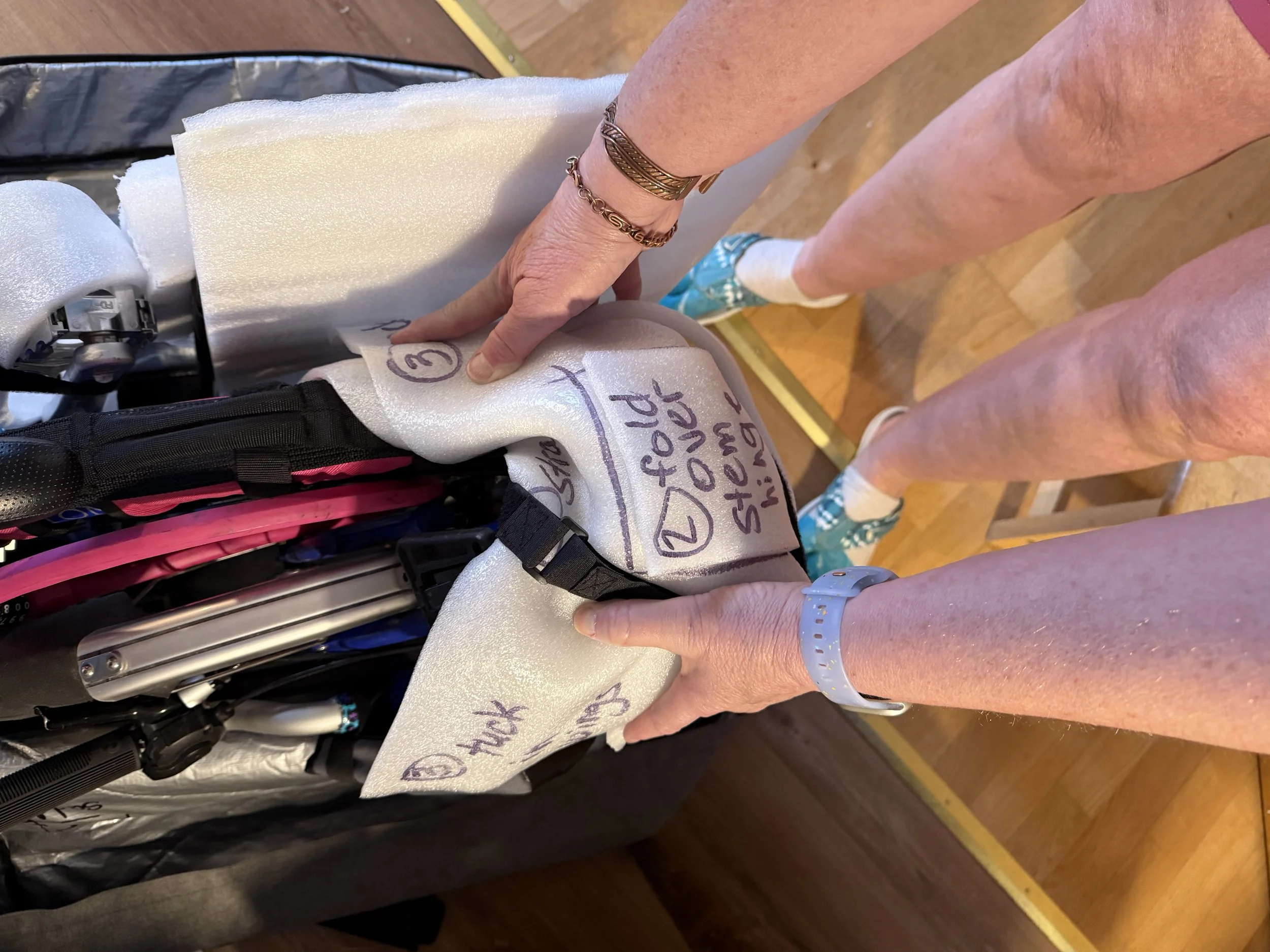
Afterward, I used flexible sheets of high-density packing foam and a hot-glue gun to make pads for protruding parts of the folded bicycle. They are not elegant, but they work. We have not used the included garment bags, which are intended to hold clothing and add cushioning, so we cannot evaluate that system.
Wheels, Trolleys, and Handles
The Sightseer has removable wheels, but they must travel inside the bag. Without a luggage trolley, that means removing them before check-in and reinstalling them in baggage claim. Even with the wheels attached, the bag is not as maneuverable as a four-wheel spinner.
If there are trolleys at both the arrival airport and the hotel, however, we may never need to attach the wheels at all. The bag’s wraparound strap is also surprisingly useful because its built-in handles are awkward; the strap provides another place to grab and reposition a fully loaded bag.
When We Chose the Sightseer
We choose the Sightseer when storage space at the destination matters, when we expect to transport the empty bags ourselves or when the itinerary has relatively few baggage-handling events. We would be much more cautious about using a soft bag for a T Line or a bicycle fitted with delicate carbon components. Brompton describes the C Line as steel, while the T Line combines a titanium frame with carbon components.
B&W hard-sided case
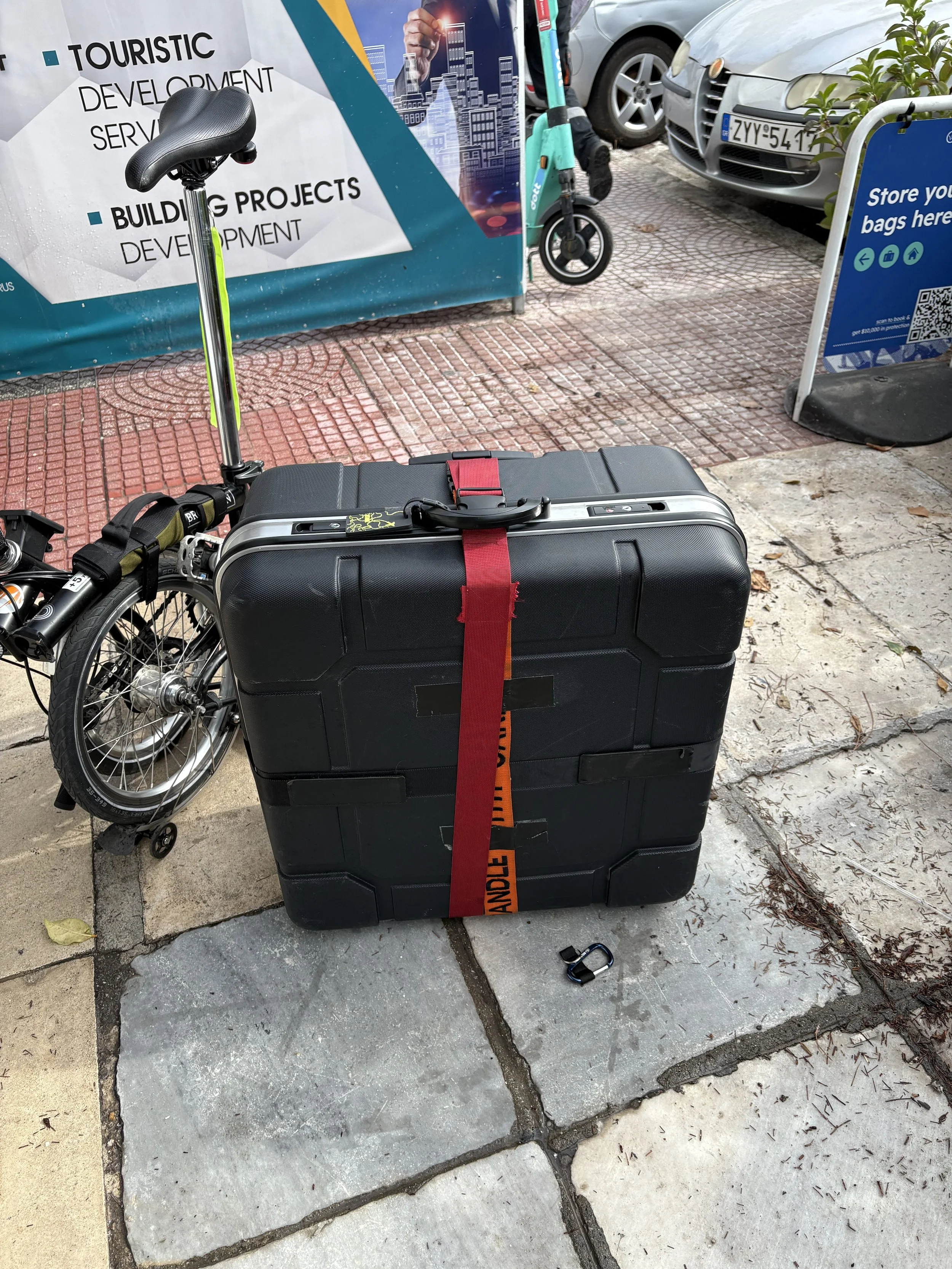
The B&W is an almost-square molded-plastic case with aluminum edging, latches, locks and attached straps. The bike fits into a defined space with room for a helmet, lock and bike pack. Close it, latch it, strap it and go. Of the cases we have used, it gives us the greatest confidence that the bicycle will survive airline baggage handling.
That protection comes with bulk and weight. Packed, ours usually weigh close to 50 pounds. The case has two wheels rather than four, so it must be tilted and pulled. It does not collapse, and two of them consume a great deal of space in a hotel room, cruise cabin or vehicle.
TSA Inspections
TSA has opened our hard cases several times and left the usual inspection notice. We have never had a problem with the bicycles or with how the cases were repacked. The case’s simple interior probably helps: there is no complicated arrangement for an inspector to reconstruct.
The Lifting Handle Problem
The B&W has a telescoping handle for rolling, but essentially one small handle for lifting. Hoisting a 50-pound case into a vehicle or onto a trolley with one hand is a royal pain.
We have bought box straps with an additional handle. They should let us lift with two hands and provide backup containment if a case is forced open. That idea comes from an earlier trip when a large Samsonite clamshell carrying a folding Dahon fell from a Southwest baggage cart and sprang open. We have not yet tested the new straps on a trip.
The Case of the Japanese Kit-Kats
One of our cases has become slightly sprung, and the aluminum edges no longer align easily. We suspect it was dropped or heavily stressed on our return from Japan, although the baggage handlers may not deserve all the blame.
I love—LOVE—finding little doohickeys to bring home to friends and family.
Japan has lots of delicious flavored Kit Kats.
I may or may not have filled every available nook around the Brompton with them. A heavily stuffed case, combined with normal baggage handling, may have helped bend the aluminum frame.
The lesson: a hard case protects the bicycle extremely well. That does not mean we should test the structural limits of the case with souvenirs.
When We Chose the B&W hard-sided case
We choose the B&W when protection matters more than portability: complicated itineraries, multiple baggage transfers or trips where transportation and storage are already arranged. We would also use a hard case for a T Line or another bicycle with especially delicate components.
How We Decide Which to Use
For trips where we must carry and store the cases ourselves, the Vincitas usually make more sense. For cruises or itineraries with dependable transportation and somewhere to store large empty cases, we lean toward the B&Ws. There is no perfect case; we are choosing which inconvenience matters least on a particular trip.