
Cycling Etiquette and Tactics
We’ve ridden bicycles together for nearly 40 years, in a lot of different places and circumstances.
We don’t know everything about cycling etiquette, and we have no desire to write a cycling manual. But most of what we’ve learned comes down to four things:
Be Polite & Courteous, and follow the Law;
Be Predictable,
Remember that it’s Better to be Alive than Right, and
Make Eye Contact.
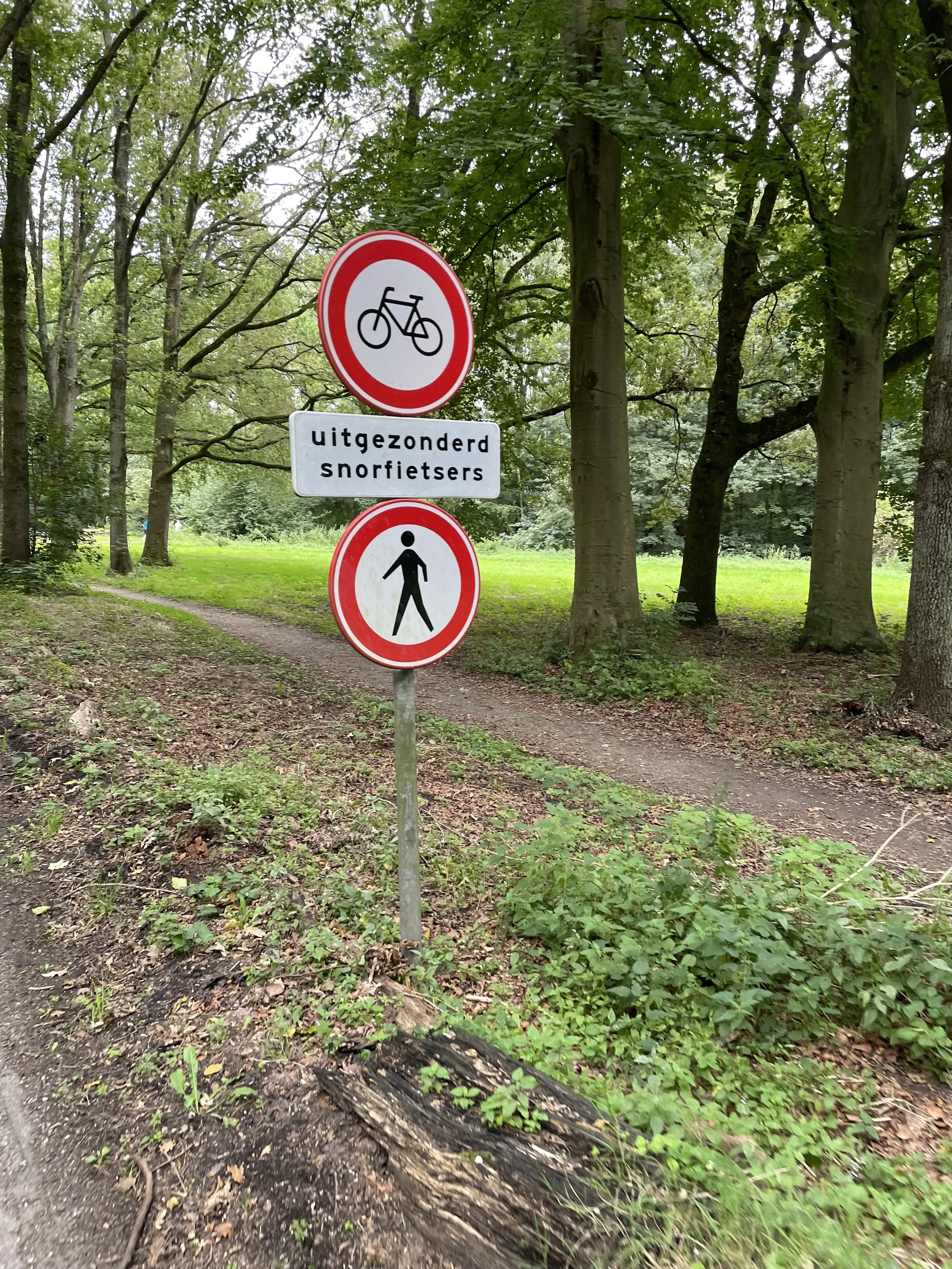
A sign in the Amsterdam Bos, the Netherlands.
Be Polite and Courteous, and follow the Law
The only time a cyclist can be completely selfish is when riding alone on a closed road with nobody else around. Everywhere else, we share space with other people - pedestrians, runners, cyclists, scooter riders, dog walkers, families, drivers, and people using mobility devices.
If you are overtaking someone, give an audible warning - a bell, a friendly "passing on your left," or whatever is customary where you are. It is especially important around dogs, children, strollers, and anyone who may move sideways unexpectedly. If there is not room to pass safely and without startling someone, wait.
Sometimes people are where they are not supposed to be. A pedestrian may be standing in a bike lane. A cyclist may be blocking a trail. Be polite anyway. They are still people - beloved children of the Most High God - and practicing patience is good for the soul.
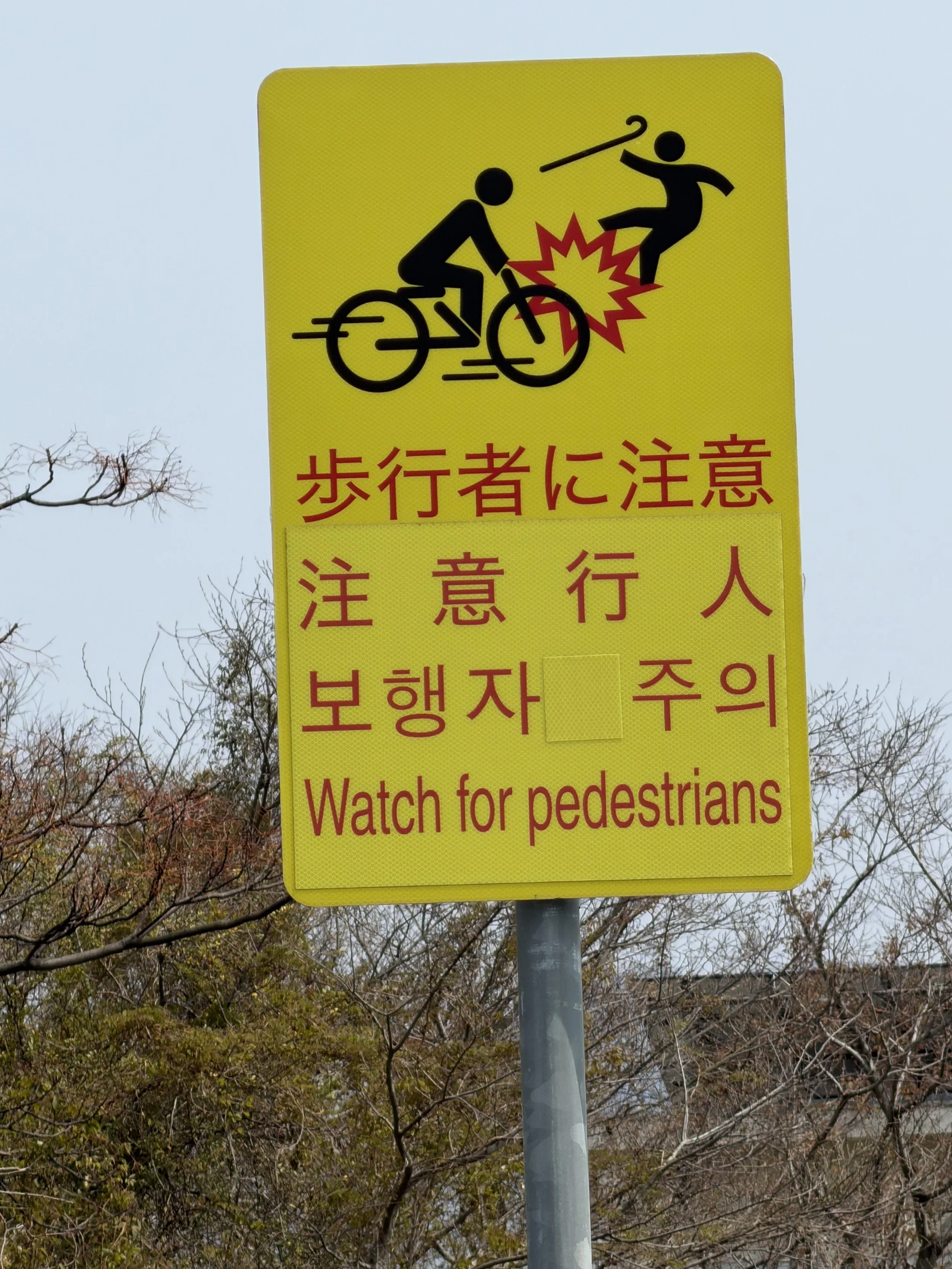
Imabari, Japan
Be Predictable
Predictability may be the most useful form of cycling courtesy. Ride where people expect you to ride. Hold your line. Signal turns. Do not suddenly dart across a path or road because you saw something interesting.
When you are meeting someone from the opposite direction, keep to the side where you are supposed to be. When you are passing, make your intentions clear. When riding with someone else, talk to them instead of assuming they know what you are about to do.
John and I have ridden together for so long that much of our system is almost instinctive. I cannot not give you a useful step-by-step description of it. You’ll develop your own system. Talk to each other instead of assuming everyone else knows what you’re doing. Be patient. You don’t have to be the first one there; you’re not Tadej Pogačar.
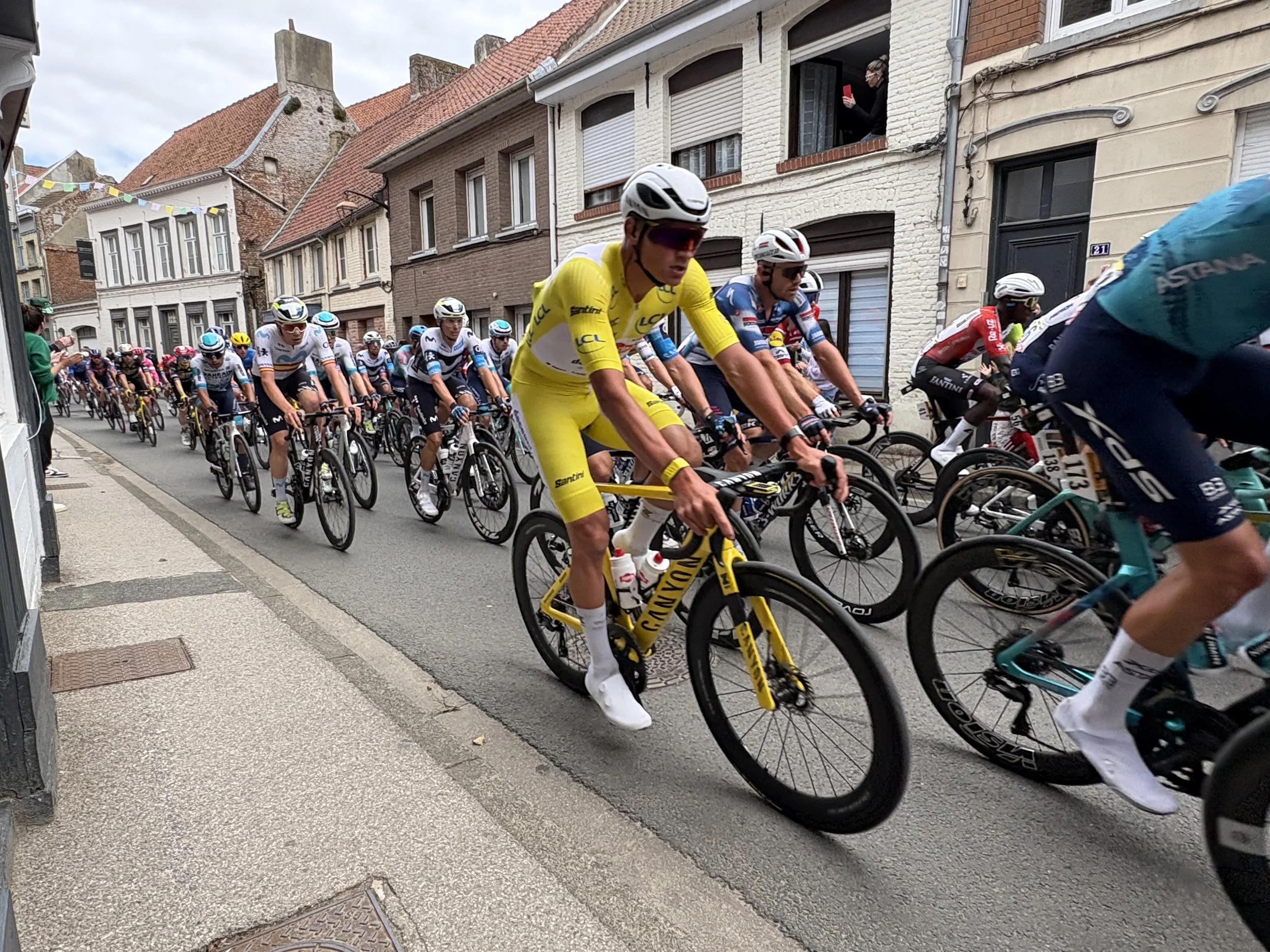
Stage 3 of the 2025 Tour de France, Cassel, France
It’s Better to be Alive than Right
Who has the right-of-way?
The law matters, and you should know and abide by the rules where you are riding.
But legal correctness is not armor.
If a car is barreling toward an intersection and the driver clearly has not seen you, give up the right-of-way. If a road technically allows bicycles but feels narrow, fast, and unpleasant, perhaps it is simply a lousy road to ride on. If there is not enough room to pass someone on a trail, slow down and wait.
This is not about surrendering your rights. It is about judgment. A bicycle is wonderfully flexible, but the cyclist is also the vulnerable person in a vehicle-bicycle collisions.
The same common sense applies to riding single file or side by side. We tend to ride single file when traffic—motorized or otherwise—makes that appropriate, and side by side when conditions allow. Local rules differ.
Courtesy and awareness always serve travelers well.
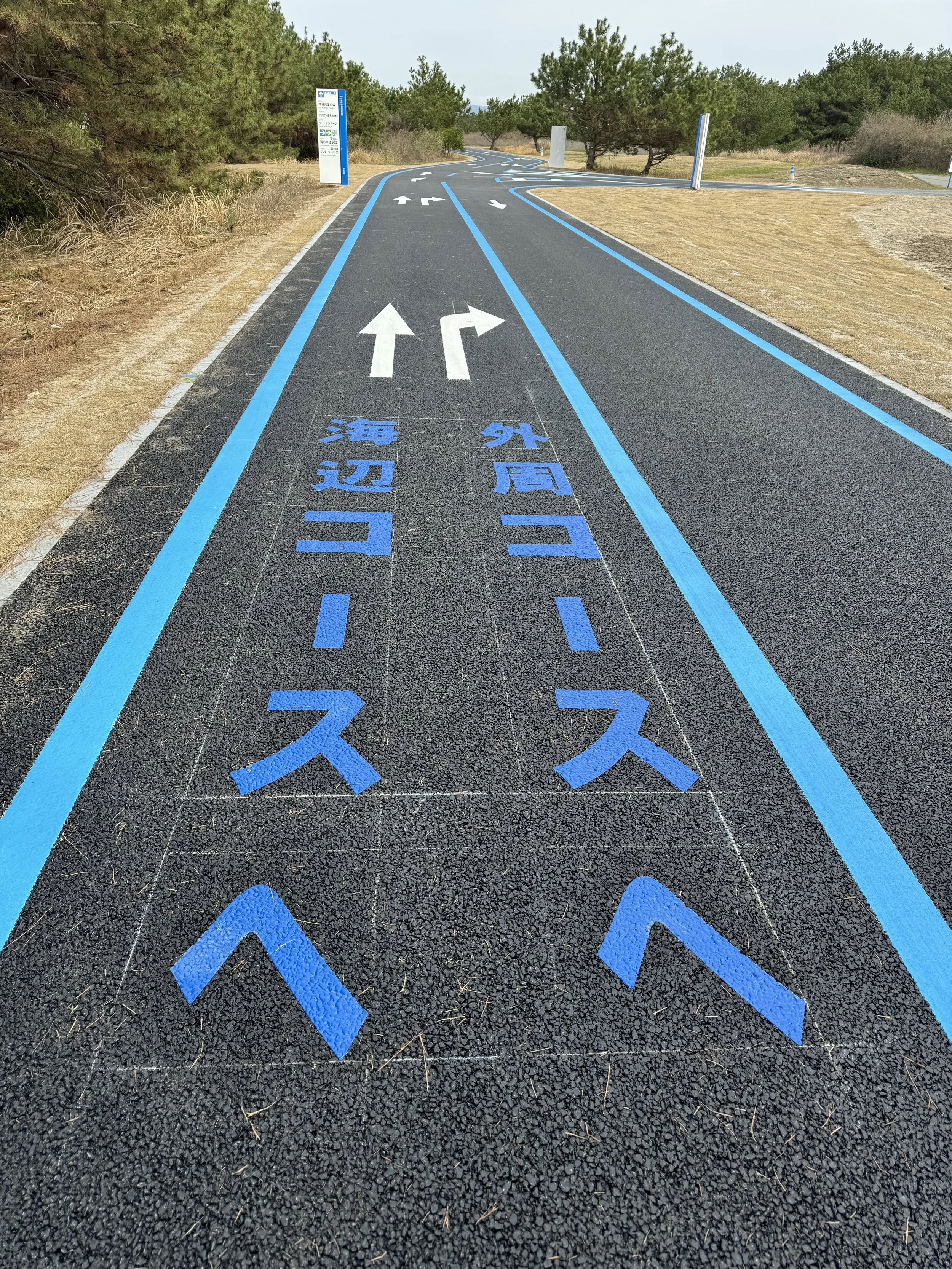
Uminonakamichi Seaside Park, Japan
Make Eye Contact
This may be our strongest practical rule: whenever your path is about to cross someone else’s, make eye contact.
That is especially important with drivers. A driver waiting to turn may be looking the opposite direction for traffic and may never have looked toward you at all. Another may be looking at a phone, talking to a passenger, or reaching into the back seat. Seeing the car does not mean the driver has seen you.
If the driver has not looked at you, assume you have not been seen. Wait until you know what is happening before riding in front of the vehicle.
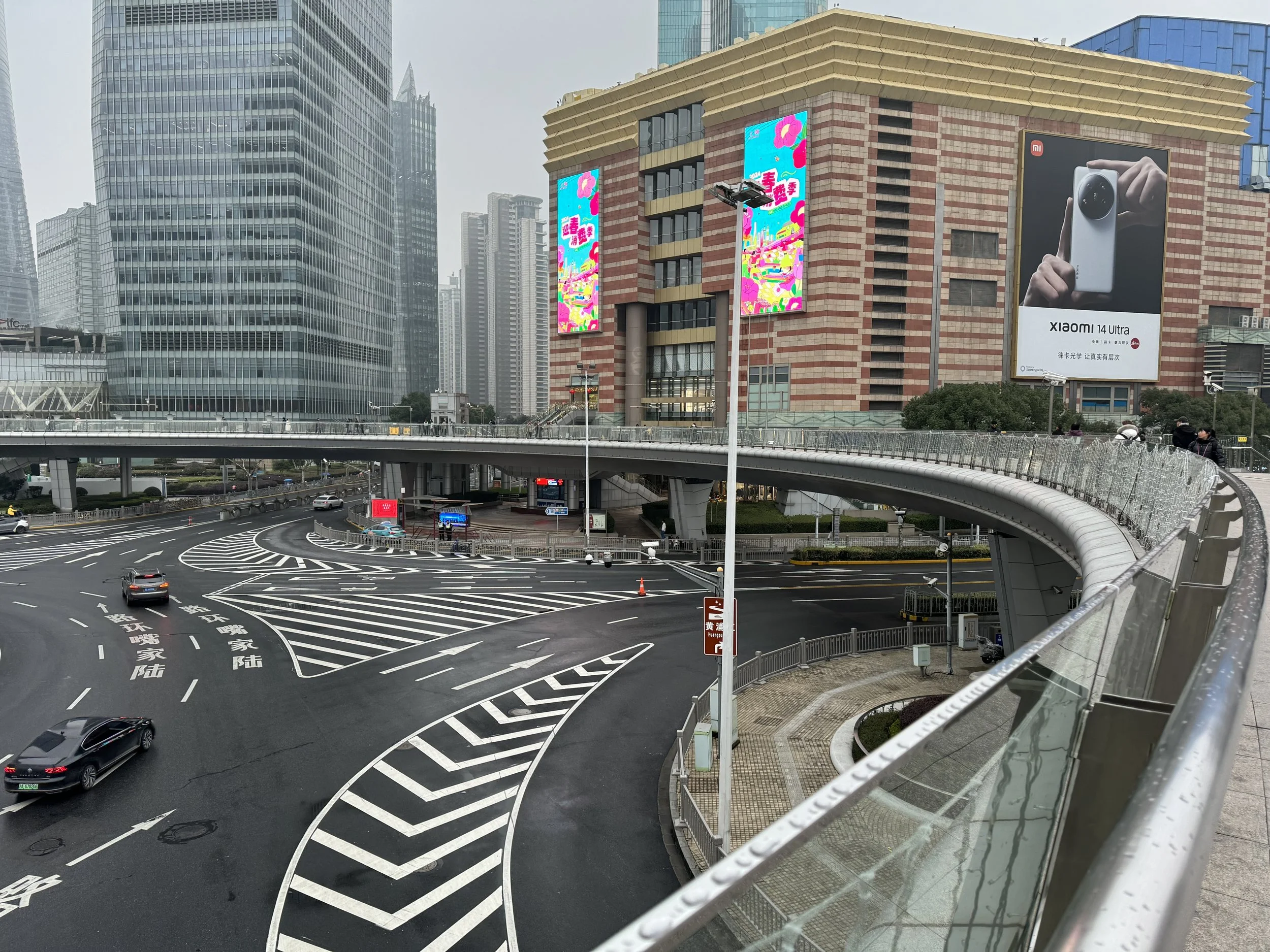
One of the few intersections we’ve ever seen where a cyclist or pedestrian doesn’t need to make eye contact with a driver: this huge roundabout in downtown Shanghai has an elevated pedestrian walkway encircling the entire intersection. Access is by elevator or stairs. Wow.
Riding in Groups
We do not want to turn this into a manual, but a few habits have served us well: communicate stops and turns; call out hazards and vehicles; establish regrouping points; carry water, snacks, and basic repair supplies; and have a way to contact one another if the group gets separated.
And be patient with the slower rider. The point of riding together is, at least occasionally, to be together.
The Short Version
Be polite & courteous, and follow the law.
Be predictable.
Remember that it is better to be alive than right.
Make eye contact.
The rest is common sense, local rules & regulations, and paying attention to the people around you.
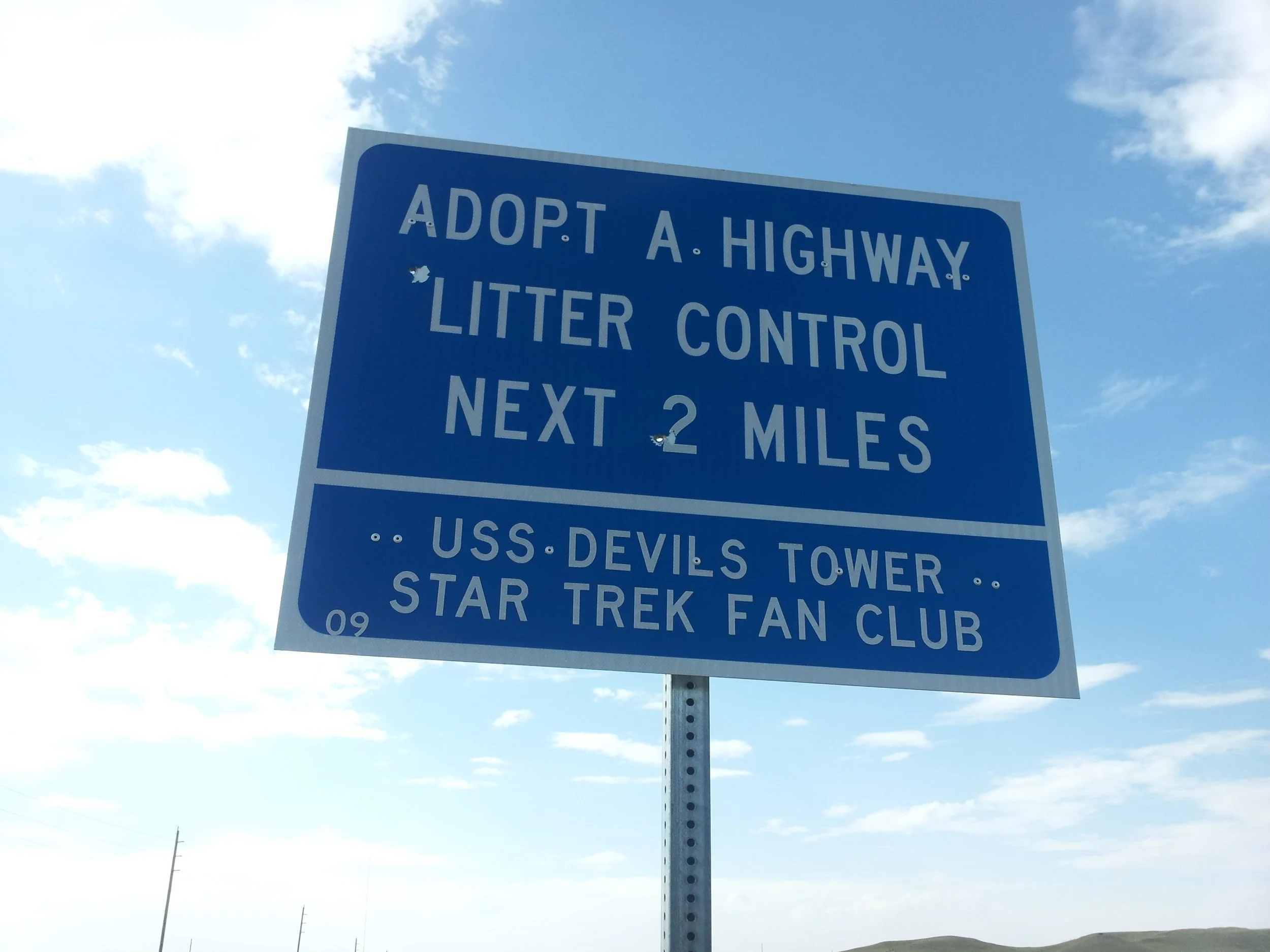
And now for something completely different . . . A highway sign on Wyoming 210 west of Cheyenne.