At some point, walking gets harder.

Sometimes it’s age.  Sometimes it’s injury or disability. 

Sometimes it’s simply the weight of carrying more than your body wants to carry.

You still want to move.  You still want to get out and explore.
But your body isn’t quite as enthusiastic as it once was.

You sit more.
You skip outings.
You watch others go a little farther than you can.

And over time, the world starts to feel smaller.
But it doesn’t always have to stay that way.

Sometimes the answer is simple. Sometimes it’s just a matter of finding a different way to keep going.

For a long time, we thought of “mobility” as something that applied to other people.

People who used walkers.
People in wheelchairs.
People with parking permits and clearly defined limitations.

But that’s not how it actually works.

There are degrees of mobility.
And there are degrees of constraint.

Sometimes you can walk—but not far.
Or not all day.
Or not without paying for it later.

And that changes how you move through a place.

Mobility isn’t defined by a category.
It’s defined by what helps you keep moving.

And that doesn’t have to mean specialized equipment.

Sometimes it’s something ordinary—used differently.
Something that gives you range without taking away independence.

Mobility can be more than getting from the parking space into the grocery store.

It can mean moving just enough to see what’s around the next corner.
Stopping at the bakery in the next block.
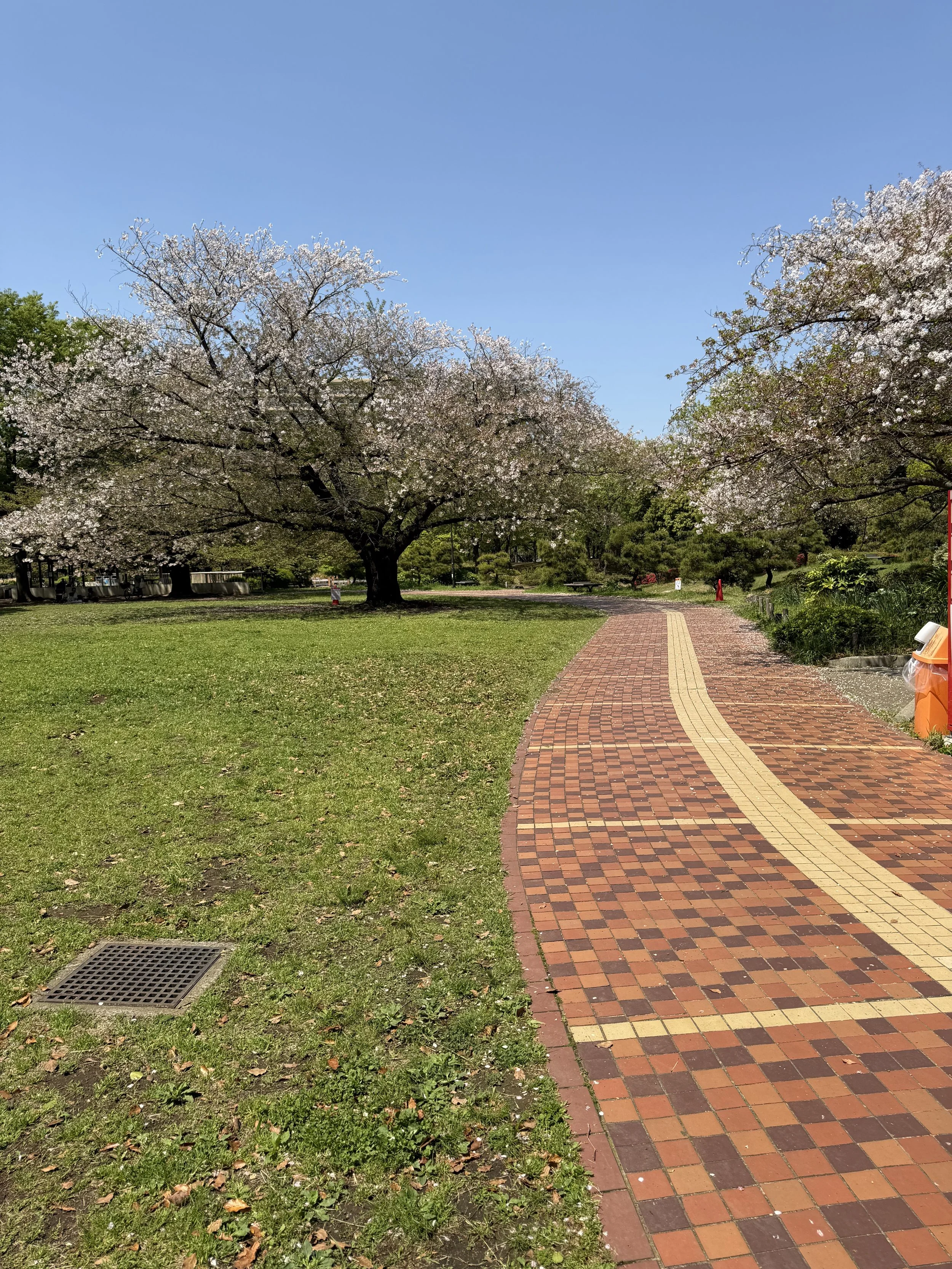
Meandering through blossoming cherry trees.

It can mean choosing your own pace—your own way of exploring—rather than following someone else’s plan.

Sometimes it means finding a different way to get where you want to go—without wearing you out.

For us, that meant wheels.

We had always ridden bicycles around town—for errands and for fun.
So when our travel world began to shrink as walking became more difficult, turning to bikes felt natural.

We didn’t arrive at that all at once.

We tried bike share in cities.
We rented bikes when it made sense.
We experimented with small folding bikes that could be taken apart and packed.

Each step gave us a little more range—and showed us what mattered.

Eventually, we found ourselves wanting something we could take anywhere, without planning around it.

That’s what led us to Brompton bicycles.

Brompton bicycles turned out to be a good fit for the way we travel.

They’re real, fully capable bicycles for adults—engineered to fold into a compact, elegant package without taking anything apart.
From packed to riding takes about ninety seconds.

Which means we can bring them with us, unfold them, and go.

Most days start the same way.
We arrive somewhere new.

We wake early, drink tea, and look at maps.
Where shall we explore today?

Bikes unfolded, water bottles filled, snacks packed, helmets on.

And then we just ride.

  1. What “Counts” as a Mobility Device

  2. Folding Bicycles as Mobility Devices

  3. When This Works—and When It Doesn’t

  4. Getting Started

Kamiedo Chuo Park, Tokyo, April 2026.

Neighborhood bakeries must have a sort of magnetic pull for Bromptons (at least those like ours, that are steel). The bikes seem to find their own way to the really good ones. Corfu, Greece, November 2025.

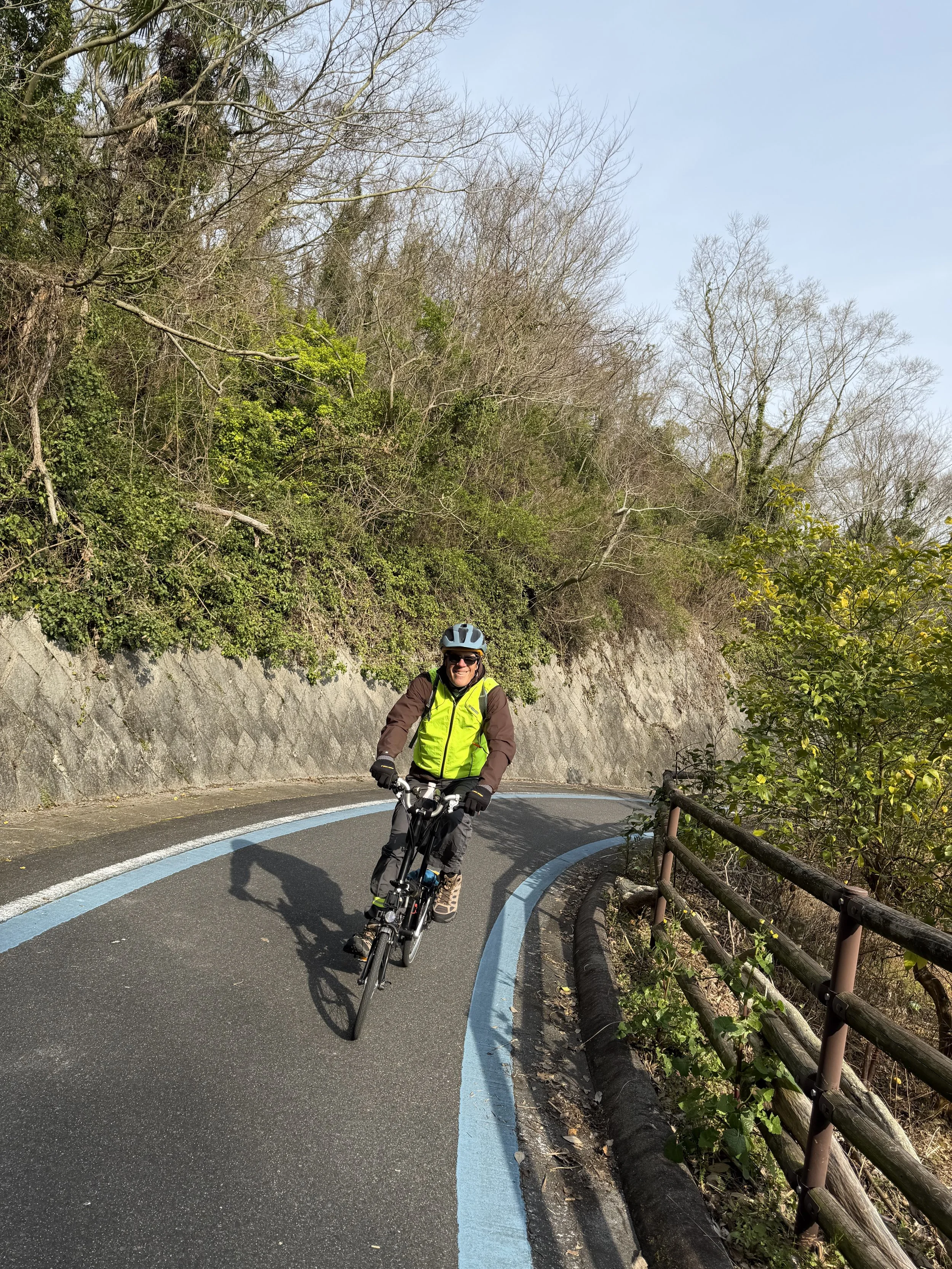
John on the Shimanami Kaido near Imabari. April 2026.