
When Bicycle Mobility Works — and When It Doesn’t
We are enthusiastic about bicycles as mobility, transportation, and fitness tools.
But they are not the answer for everyone.
Different people need different mobility solutions.
A bicycle can solve one mobility problem beautifully while being completely wrong for another.
The important question is not whether cycling is good or bad.
It is whether it works for a particular person, in a particular environment, for a particular purpose.
Where bicycles can shine
Bicycles can be particularly effective when a person has limited walking endurance but retains good balance, coordination, judgment, and the ability to pedal.
They can turn distances that are formidable on foot into relatively easy trips.
A two-mile walk may be a major undertaking. A two-mile bicycle ride may be almost effortless.
Protected bike paths, rail trails, quiet streets, bikeways, waterfront promenades, canal paths, bike lanes, and other separated routes can make this especially successful.
Electric assistance can expand the possibilities even further.
And folding bicycles add portability, allowing the bike to become part of a larger transportation system involving trains, ships, cars, and airplanes.
But every one of those advantages comes with qualifications.
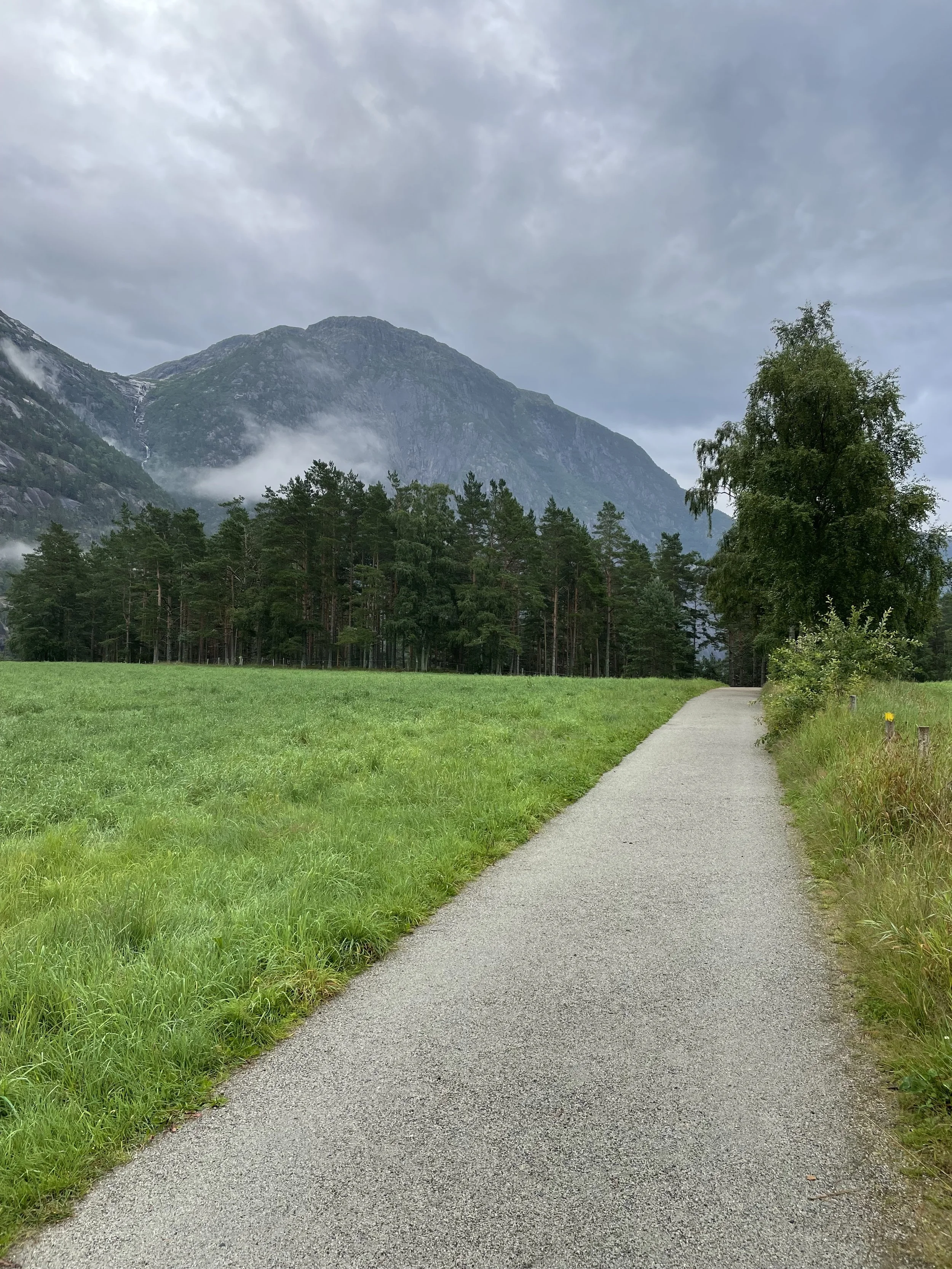
Where it works beautifully: a smooth, separated path near Eidfjord, Norway, turns a dramatic landscape into an accessible cycling route. The environment can matter as much as physical ability.
Cycling creates its own mobility problems
A person still has to get on and off the bicycle.
They may need to balance at intersections.
They may need to lift or maneuver the bike.
They may encounter stairs, cobblestones, steep ramps, crowded sidewalks, poor pavement, heavy traffic, gravel, mud, or potholes.
Rain, wind, heat, snow, and darkness can make cycling less safe or simply impractical.
A bicycle may get a flat tire, throw a chain, or develop worn brake pads.
A route that looks easy on a map can turn out to be completely unsuitable.
And a bicycle that provides excellent mobility outdoors may provide no help at all inside the home, a grocery store, museum, airport terminal, restaurant, or hotel.
That is why bicycles may be only one part of a mobility strategy.
Someone may bicycle between destinations and use a cane when walking. They may combine an e-bike with transit. They may use a wheelchair in some circumstances and a bicycle in others.
There is no rule saying a person must choose one mobility tool and use it everywhere.
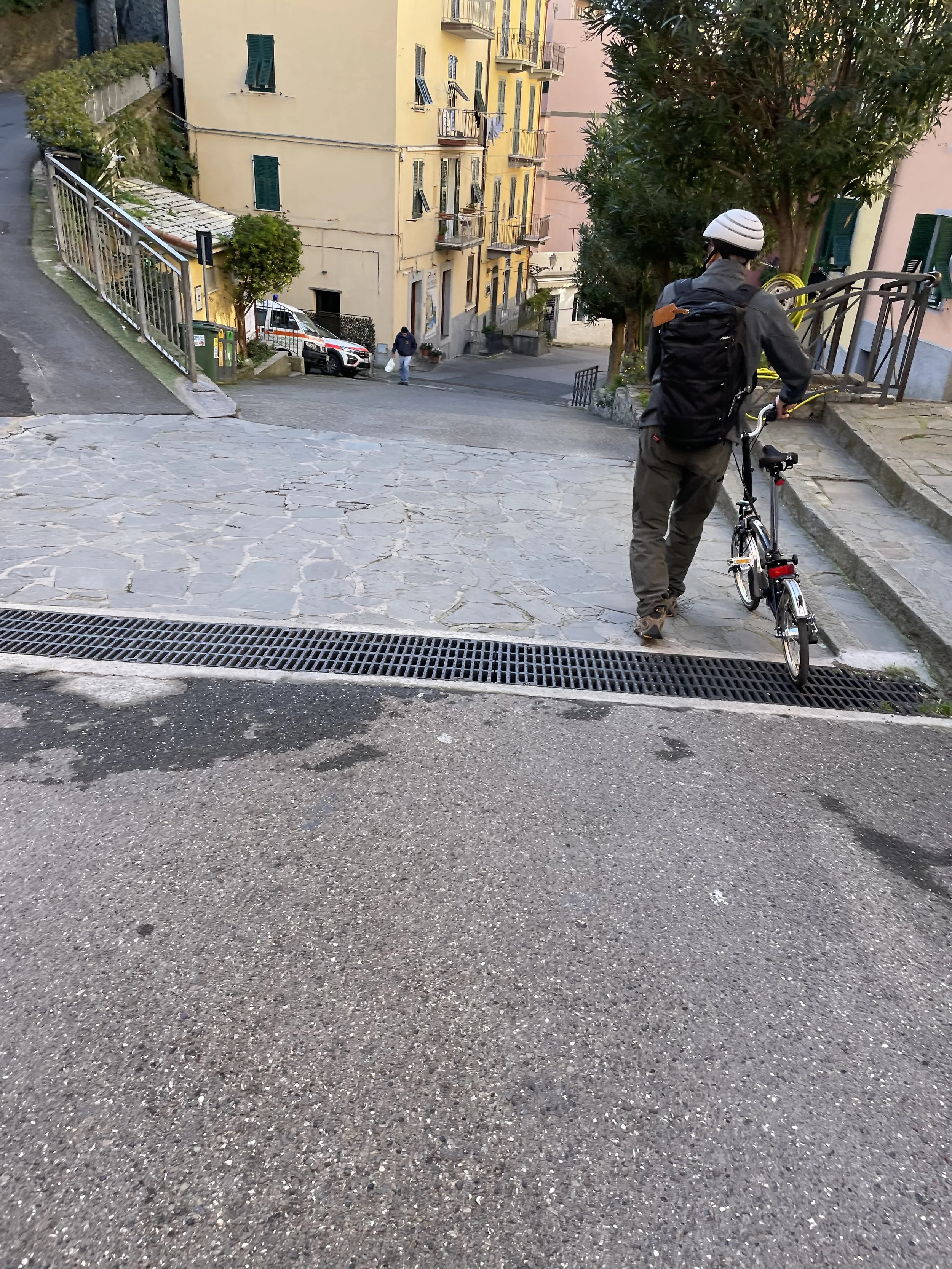
The same bicycle that creates freedom in one setting can become awkward in another.
In the Cinque Terre, steep grades sometimes made walking the bike the only realistic choice. Thankfully most sections where walking the bike is necessary are short; otherwise, choose a different route.
The environment matters as much as the person
A bike-friendly Dutch town and a six-lane suburban arterial are two entirely different mobility environments.
So are a smooth paved rail trail and a steep medieval street paved with ancient cobblestones.
The same person using the same bicycle may be wonderfully mobile in one place and effectively stranded in another.
Knowing what a route holds—and having a plan for its difficult sections—can make the difference between a manageable challenge and a route that simply does not work. Sometimes the right plan is to choose a different route.
Mobility is personal
One of the traps of aging and disability is assuming that losing one ability automatically means losing all the others.
It doesn’t.
Someone may no longer be able to hike all day but may swim beautifully.
Another person may struggle with stairs but cycle for miles.
Someone else may find a mobility scooter liberating.
Another may prefer a lightweight wheelchair, an adaptive trike, walking poles, or an e-bike.
The goal is not to preserve one particular method of getting around.
The goal is to preserve access to the world.
That is the idea behind Freedom Unfolded.
We are interested in the tools, adaptations, routes, transportation systems, and occasional bits of ingenuity that allow the world to stay large—even when the way we move through it begins to change.
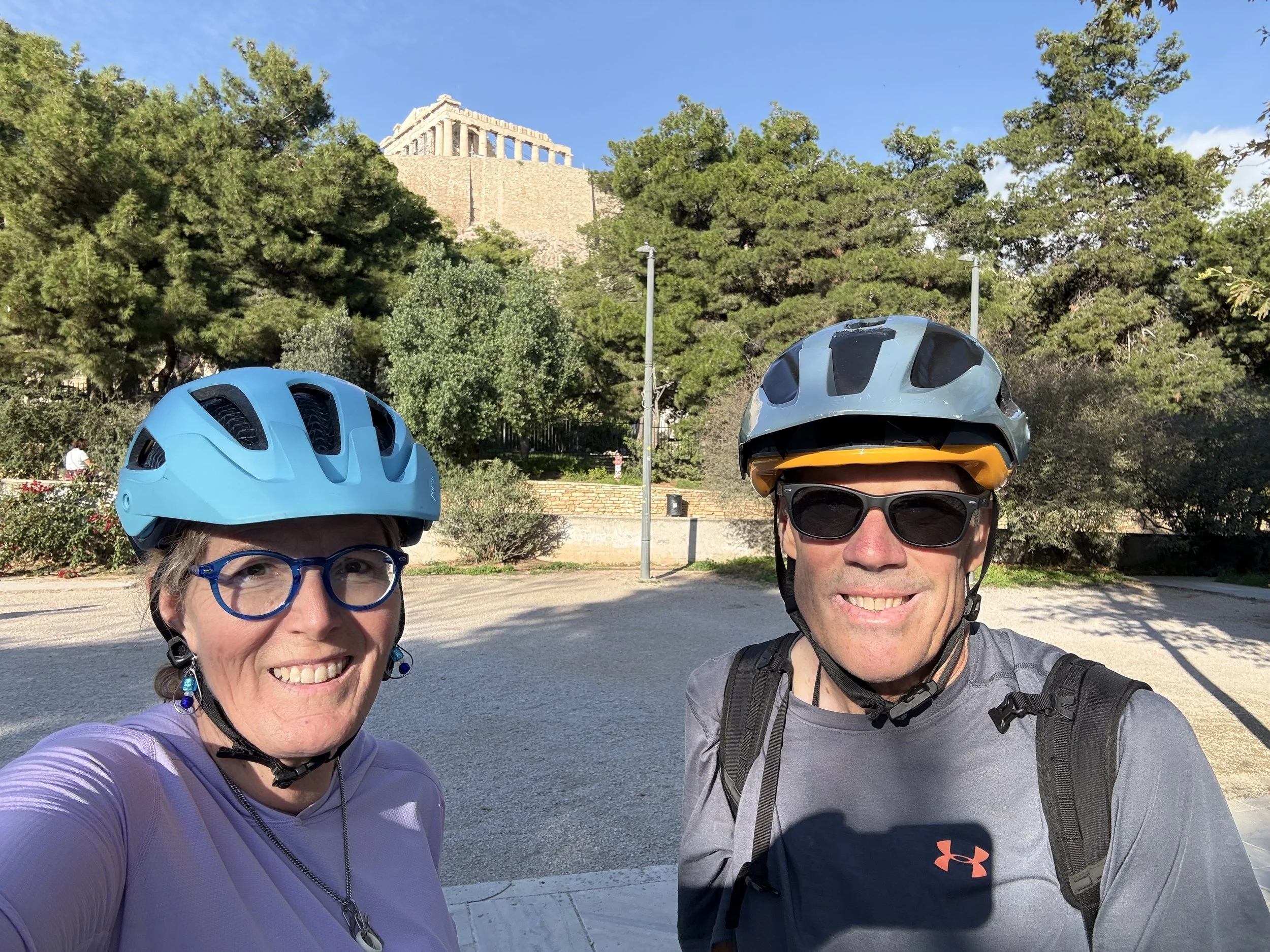
The point is not the bicycle itself. It is where the bicycle can take us.
The Acropolis & Parthenon, Athens, Greece.