
Llandudno and the Great Orme
Llandudno, Wales October 2022
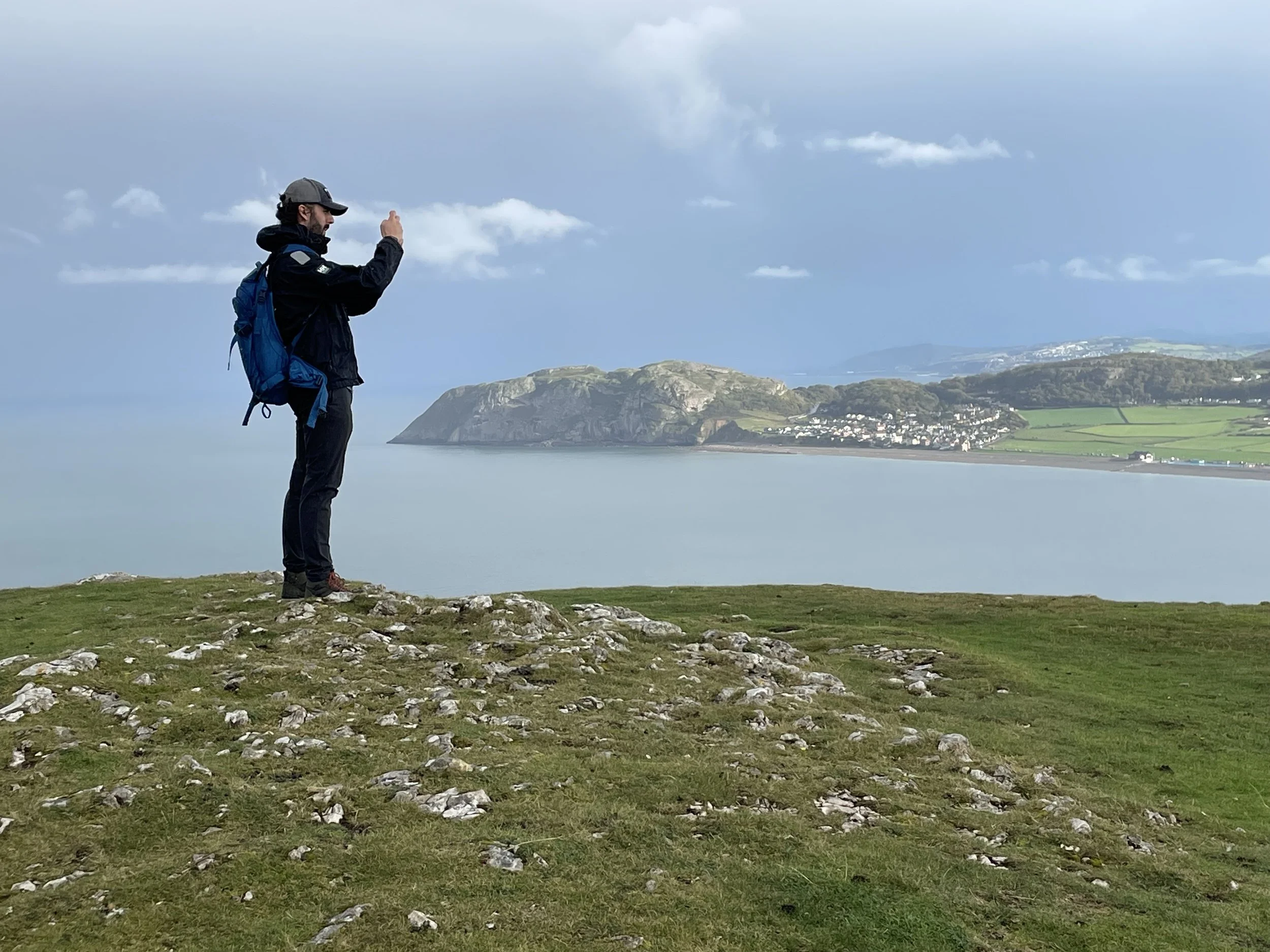
There are some rides where the bicycle is the whole point. And there are others where the bicycle simply gives you a wonderful way to experience a place.
The Great Orme was the second kind.
We spent several days in Llandudno, on the north coast of Wales, and kept finding reasons to climb onto the huge limestone headland that rises beside the town. We hiked it. We drove up it to church. We rode our Bromptons around it.
The Orme has many stories to tell, of cliffs and the sea. Of Victorian trams. Of the tiny ancient church dedicated to a local saint. Of the goats.
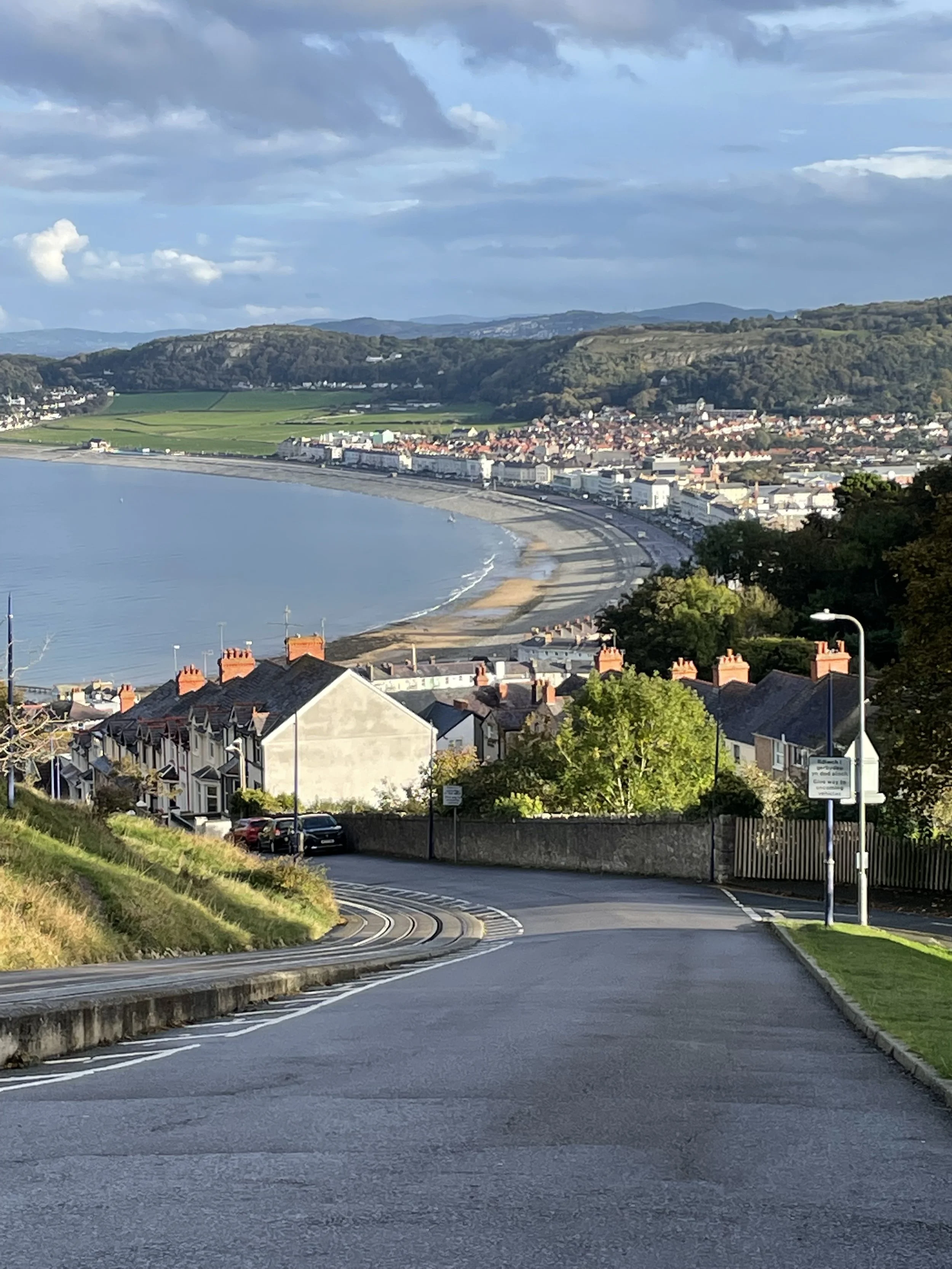
Looking north at Llandudno from the Orme. The funicular path is on the left.
On our first walk on the Great Orme, the weather was doing what weather in Wales apparently feels entitled to do in late October. It was cold, beautiful, and occasionally spitting something solid.
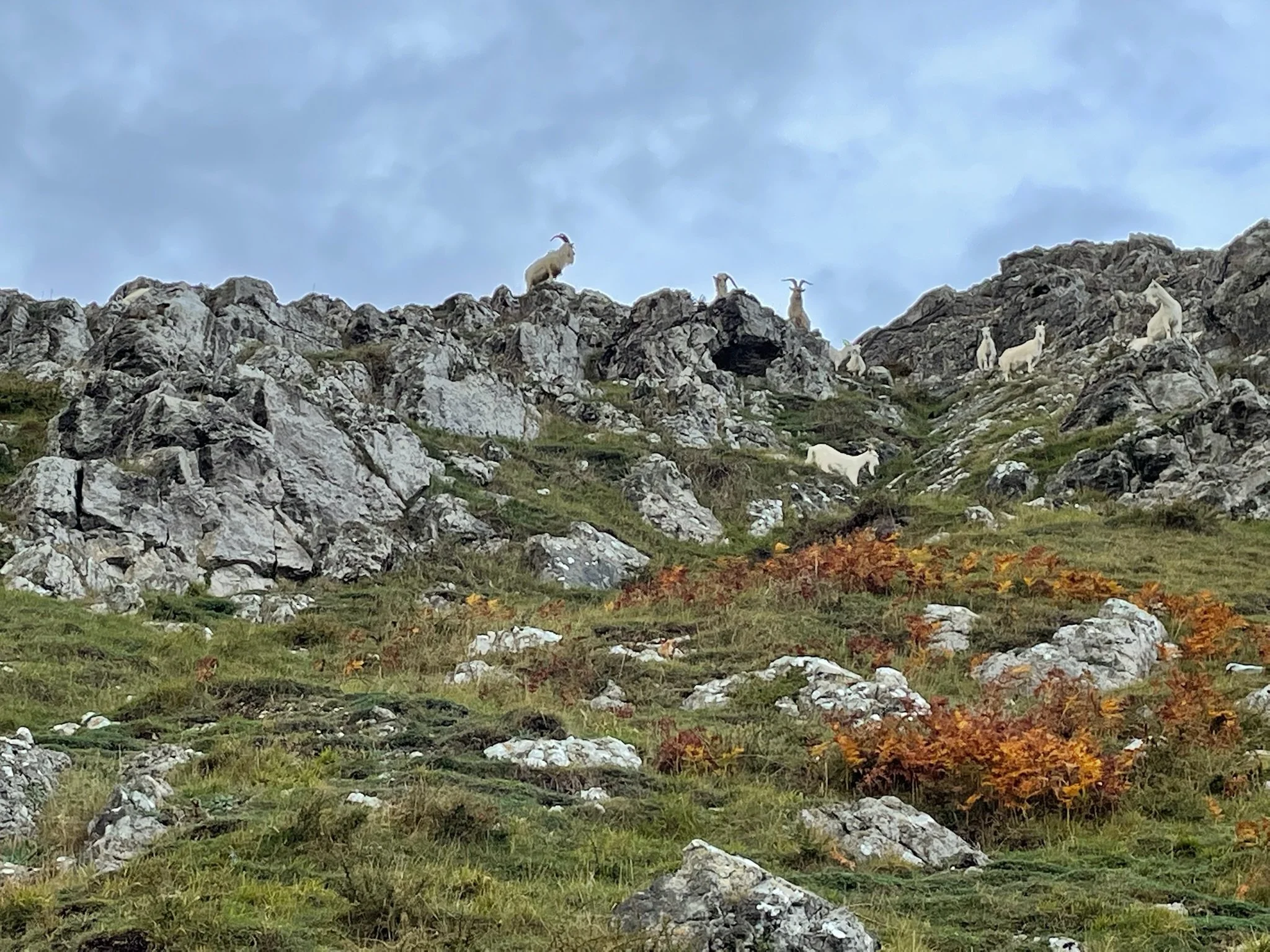
And then we came upon two white animals with enormous horns repeatedly smashing their heads together.
The Kashmir Goats of the Great Orme were in mating season. We had stumbled into the middle of the autumn rut. Male goats — billies — compete for females during the breeding season, and horn-clashing is part of that competition.
The goats themselves have a wonderfully improbable history. The Great Orme herd descends from Kashmir goats brought to Britain in the nineteenth century. The royal herd at Windsor became part of that story, and Queen Victoria later presented goats to the Mostyn family, major landowners around Llandudno. Their descendants became established on the Great Orme and have lived there in a wild state for generations.
Today the goats are among the Orme's most recognizable residents. They are not simply decorative, either. Their browsing helps keep back gorse, bramble and other scrub, helping preserve the open limestone grassland and the unusual plants that depend on it.
So those two goats were doing more than providing entertainment for American visitors. They were part of a herd with royal connections, living on the same windswept limestone headland their ancestors had occupied for generations.
And, apparently, arguing about girls.
A Mountain from an Ancient Sea
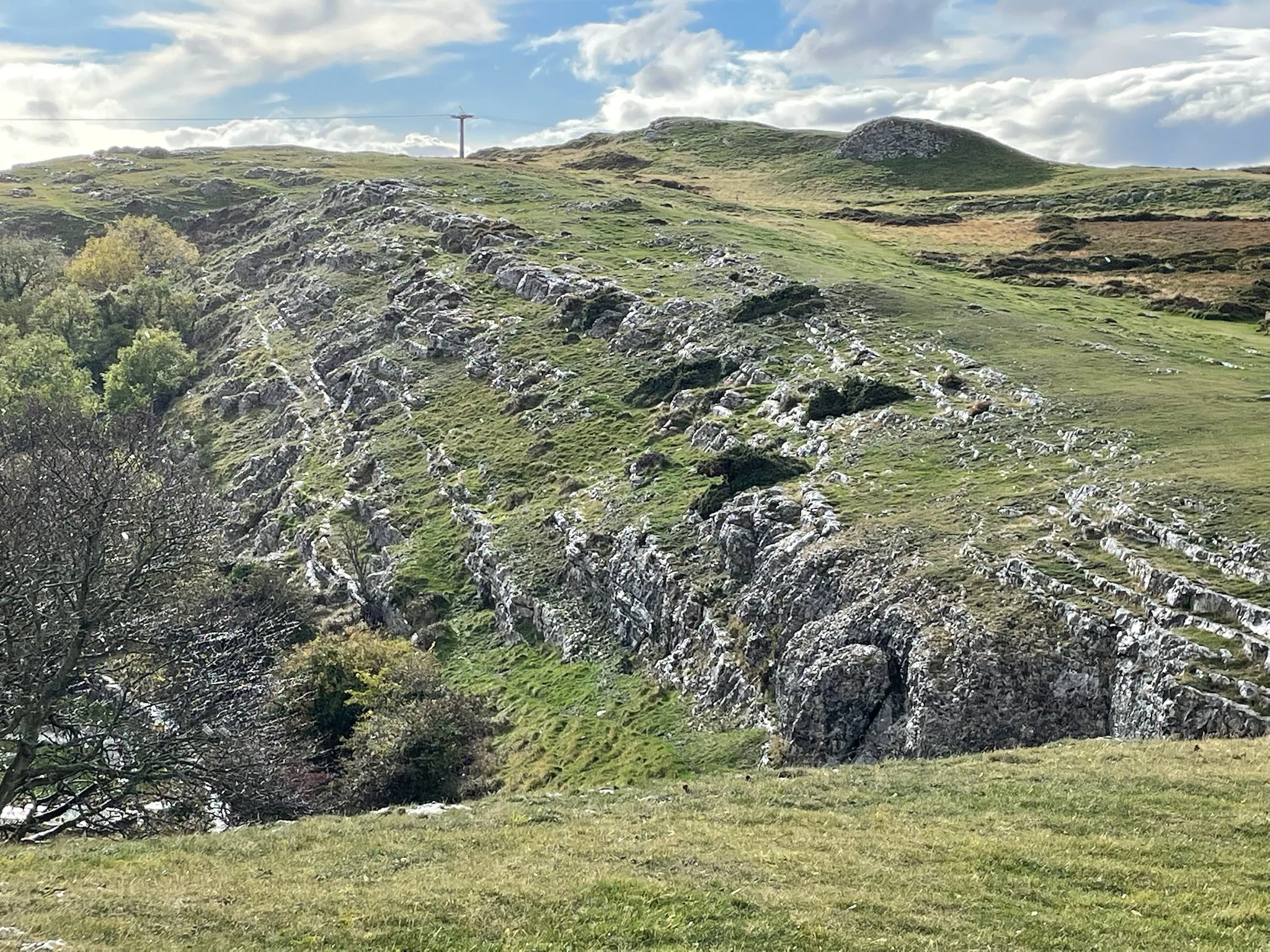
Calling the Great Orme a "mountain" may be stretching the definition a bit, but it certainly feels like one when you're climbing it.
The headland rises steeply over 200 meters — roughly 700 feet — above the sea. The rock beneath it is old; Carboniferous limestone formed roughly 300 to 350 million years ago, when much of what is now North Wales lay beneath a warm, shallow tropical sea.
Shells and skeletal remains accumulated on the sea floor and eventually time, pressure, heat, and cementation produced limestone. Later earth movements uplifted, folded, and fractured those beds, while erosion by ice, wind, frost, rain, and chemical weathering sculpted the landscape we see today.
Geology explains much of what makes the Orme look the way it does: exposed pale rock, short grass, cliffs dropping abruptly toward the sea, and extraordinary long views in every direction.
St. Tudno and the Church on the Orme
Another day, we drove our rental car up to St. Tudno's Church for Sunday worship.
The church sits tucked into a swale on the Great Orme with its graveyard spreading down toward the sea.
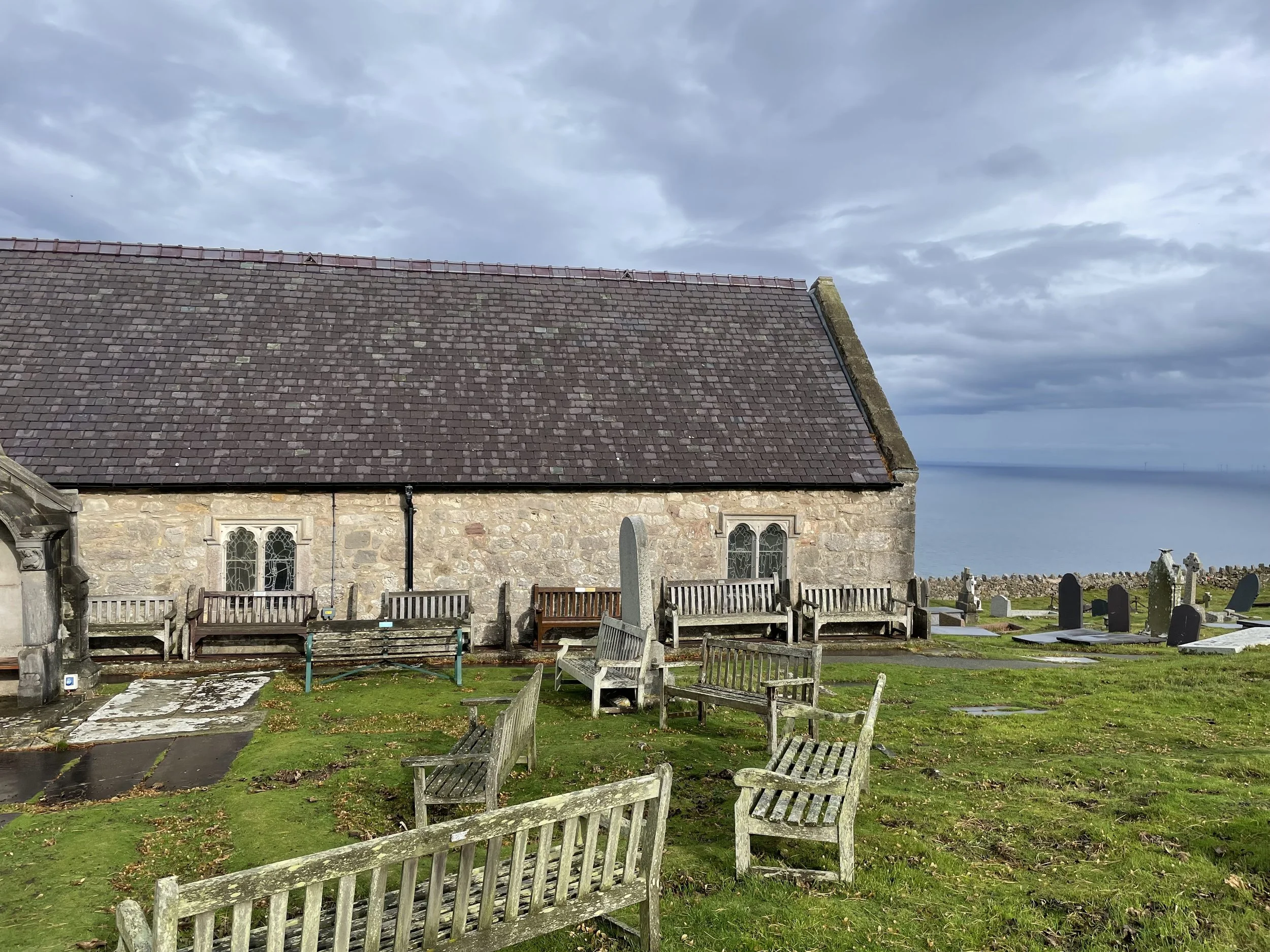
Christianity here goes back much farther than the present building. Tudno was a sixth-century Celtic Christian missionary who established a religious settlement on the Great Orme. Local tradition associates him with a small cave before the establishment of a “llan” — an enclosed religious community — from which the Gospel took root in the area.
The name Llandudno itself preserves that history: the llan of Tudno.
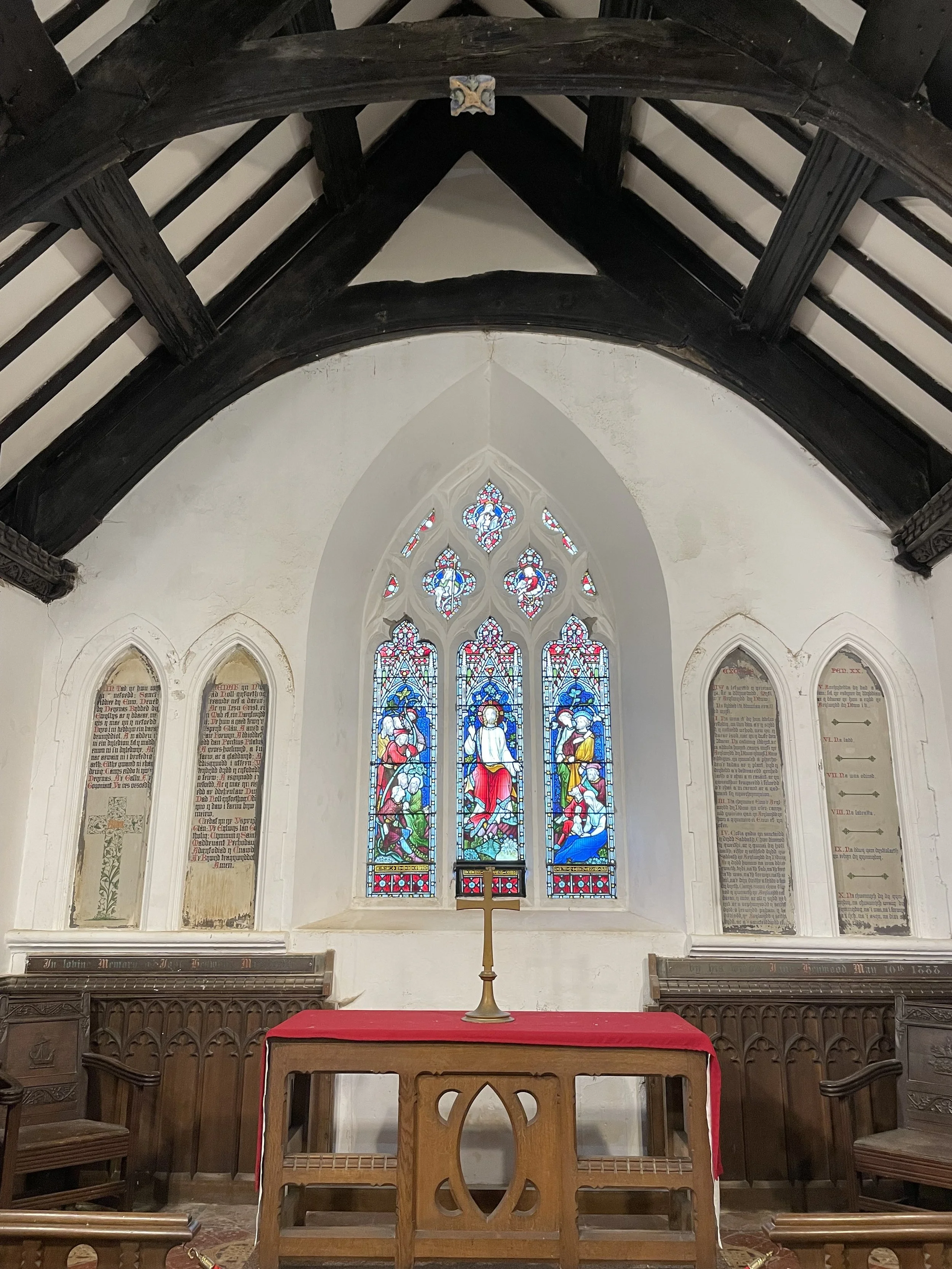
The existing church is much younger, although "younger" is relative. Parts of the building date from the medieval period, with later enlargement and restoration. What mattered most to us, though, was that it was not merely a preserved historic site. It was still a church.
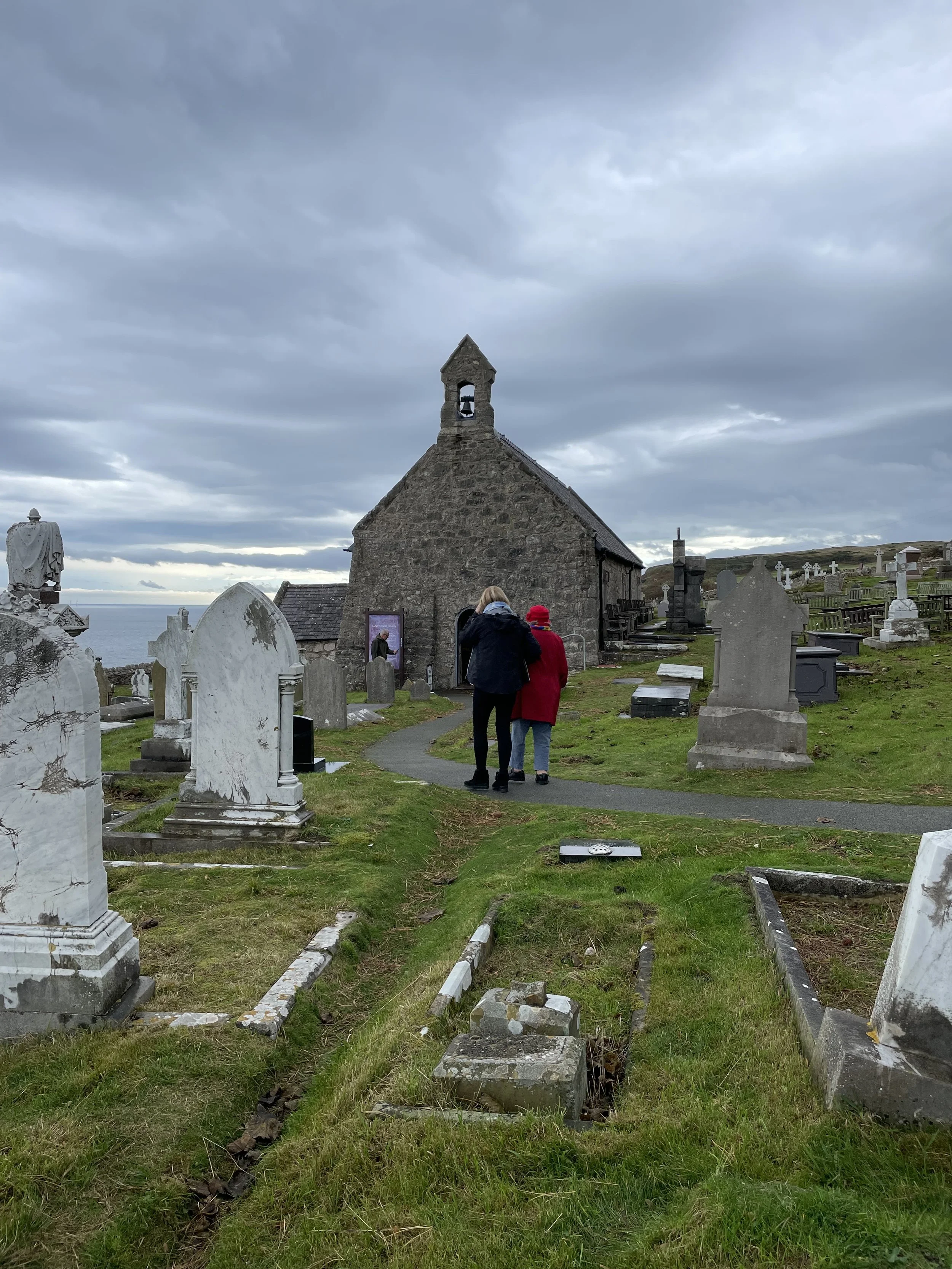
There were only about twenty people at the Sunday service we attended. One was an older woman in a bright red wool coat who, she said, had been worshiping there for many decades.
Visitors come and go. Buildings become historical attractions. But people were still worshiping there, just as people had been doing on this hillside for centuries.
Climbing the Orme for Church
The congregation also told us about the Victorian tradition of people climbing the Great Orme on summer Sundays for worship.
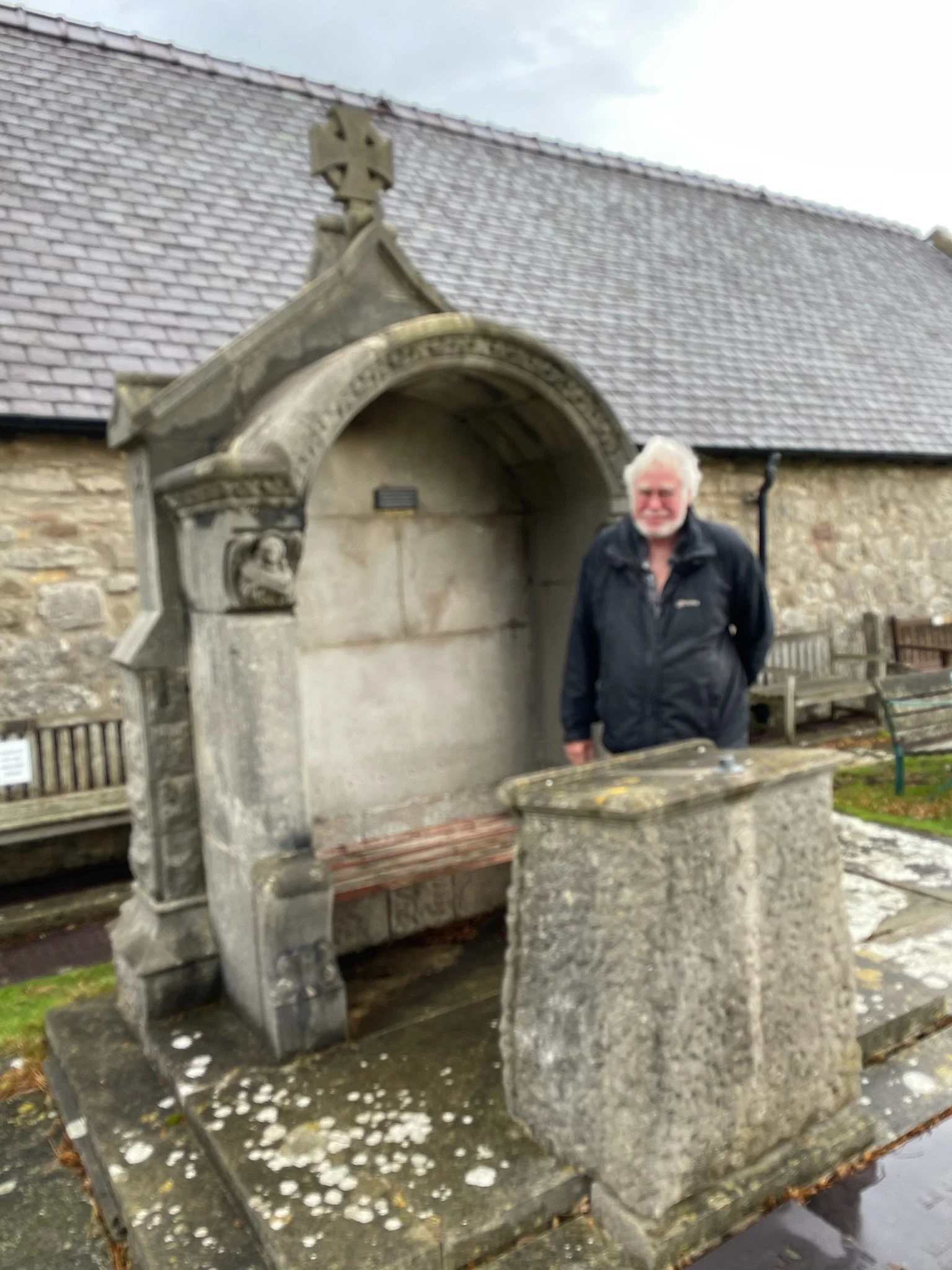
St. Tudno's Church says that weekly summer services have been held in the open air since at least 1857. The crowds eventually became large enough that a permanent stone outdoor pulpit was built beside the church.
Cadw, the Welsh Government's historic-environment service, dates the pulpit to about 1912 and says it was built to accommodate large crowds at summer outdoor services on the Great Orme.
That fits beautifully with the history of Llandudno itself. During the nineteenth century the town developed rapidly as a seaside resort, increasingly accessible by rail to visitors from Britain's industrial towns and cities.
This was not simply a playground for wealthy Victorians. A local history of Llandudno's Victorian tourism notes that seaside holidays became especially popular with people living in industrial cities, where ordinary families wanted a chance to escape the smoke and smog. The arrival of the railway in 1858 made Llandudno much easier to reach and brought large crowds of visitors from crowded indistrial towns to the fresh sea air. Wouldn’t it have been glorious to hike with hundreds of other families climbing the Orme early on a pretty summer Sunday to worship in the open air around this tiny old church with the sea stretching away below them?
The tradition continues. In summer, St. Tudno's still normally holds its weekly services outdoors when the weather permits.
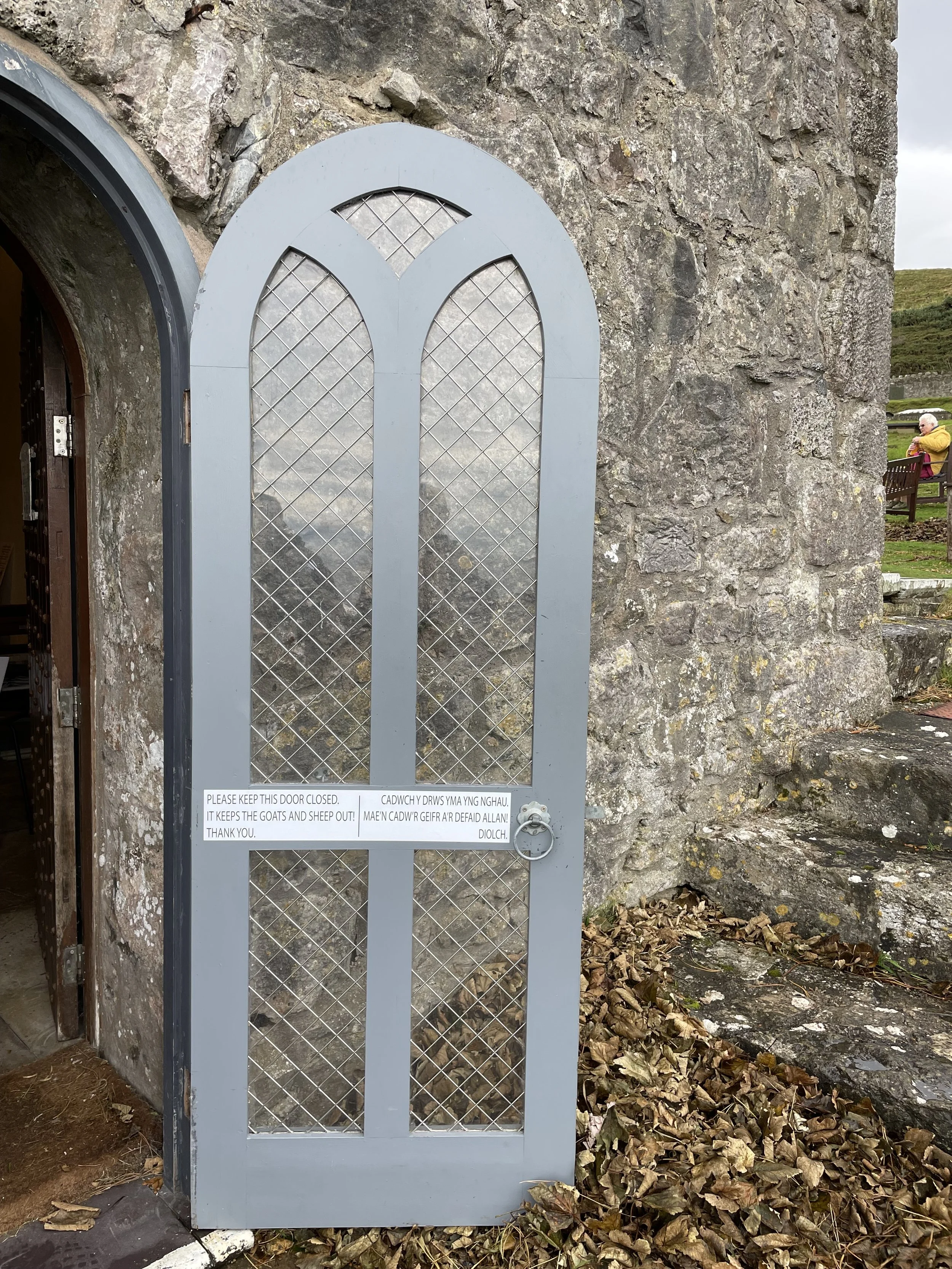
“Please keep this door closed. It keeps the goats and sheep out. Thank you.”
Bromptons on the Orme
Eventually it was the Bromptons' turn.
We started from Llandudno and rode uphill onto the Great Orme. It was a real climb, although the sort of climb where frequent pauses can conveniently be described as "stopping to admire the scenery."
The road climbs away from town and winds around the headland with the sea below. The landscape is wonderfully open: grass, limestone, stone walls, and sky.
The Great Orme is not enormous. That is part of its charm. You can travel from Victorian seaside town to exposed cliff top to goat country to ancient church in a remarkably small area.
And then you can stop for tea.
Near the far end of the Orme we reached the tea room on the point.
It was chilly outside.
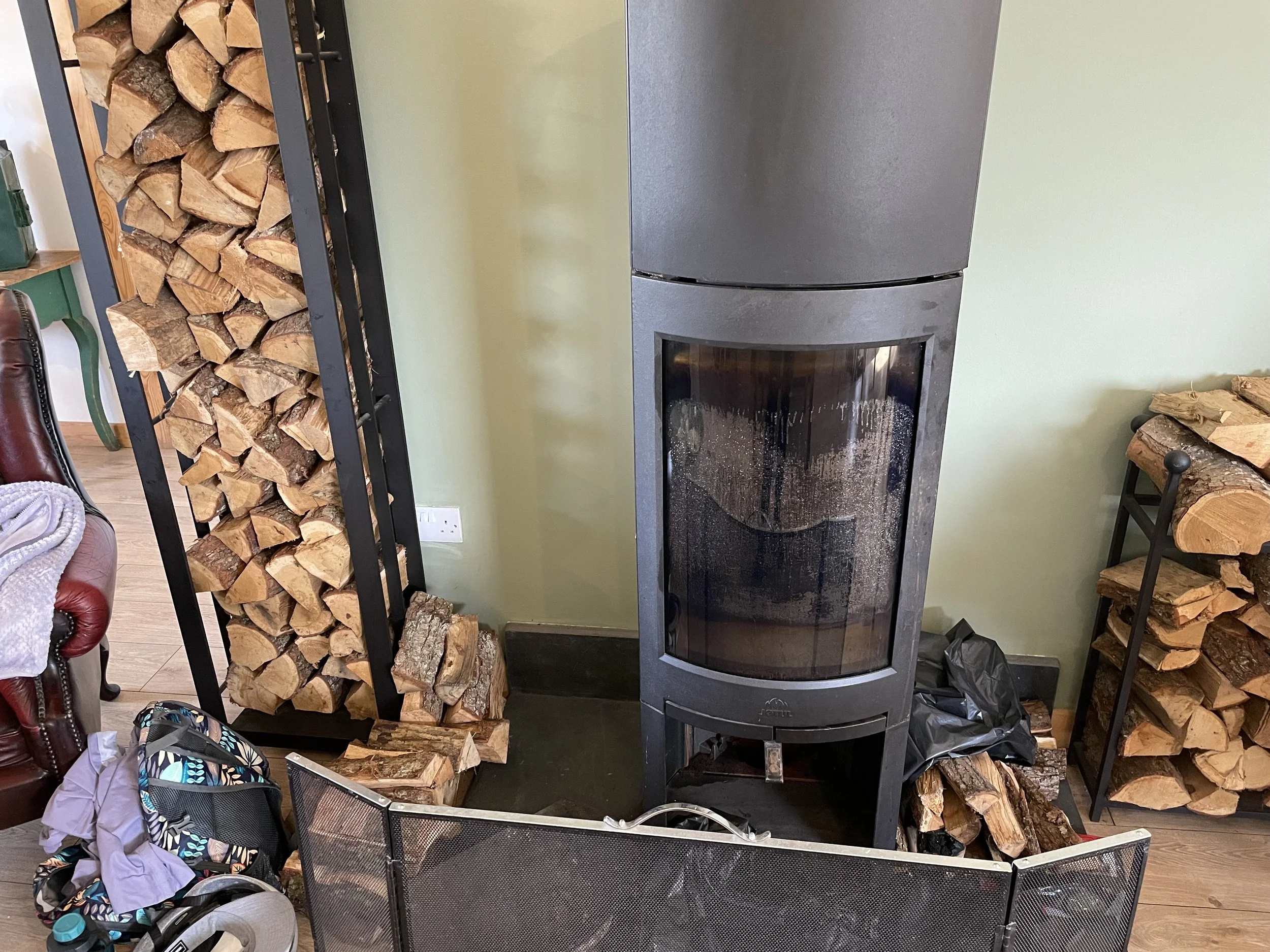
Inside was a wood-burning stove, fire merrily crackling.
It would have been criminal to ride on without stopping.
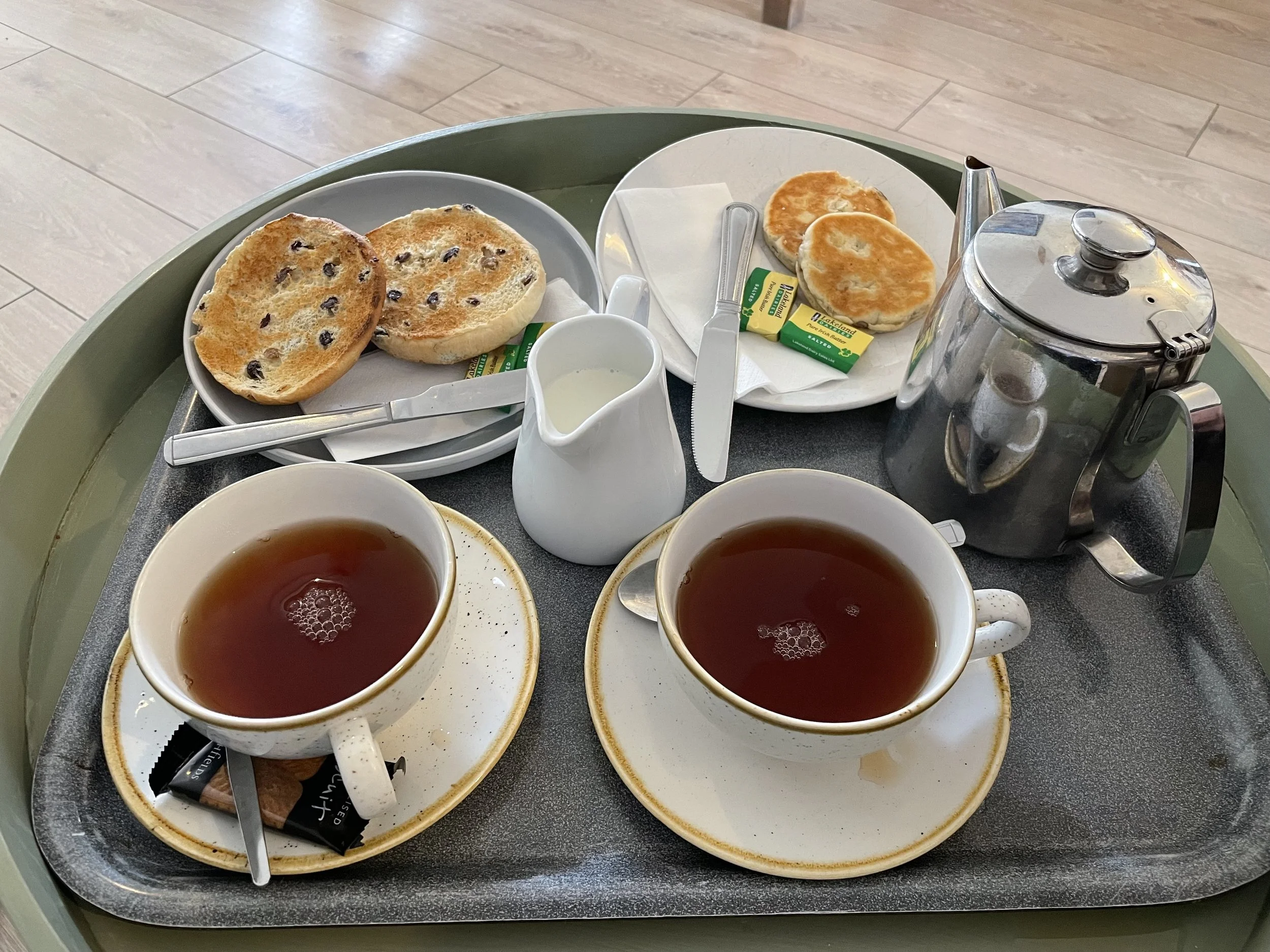
We settled in for an hour, drinking hot tea and eating scones while warming ourselves by the stove.
There are people who believe cycling should involve energy gels, sports drinks and carefully calculated carbohydrate intake.
They are entitled to their opinions.
We had tea and scones beside a wood-burning stove overlooking the sea.
All bike rides should have such a civilized rest stop.
Tea, fresh scones, Irish butter, shelter from the Welsh weather, and a serious wood-burning stove.
This may be the high point of our cycling nutrition strategy.
Down the Other Side
By the time we continued, the weather had improved. The descent on the other side of the Orme felt somewhat warmer, and the views opened dramatically over Llandudno.
And then we encountered one of the town's most distinctive pieces of Victorian engineering.
The Great Orme Tramway goes down an impossibly steep street. It is a cable-hauled tramway — Britain's only funicular that runs on public roads. Opened in 1903, the original purpose included carrying not only passengers but also goods and parcels up and down the Orme. More than a century later, the tramcars still make the climb and descend the steep hill.
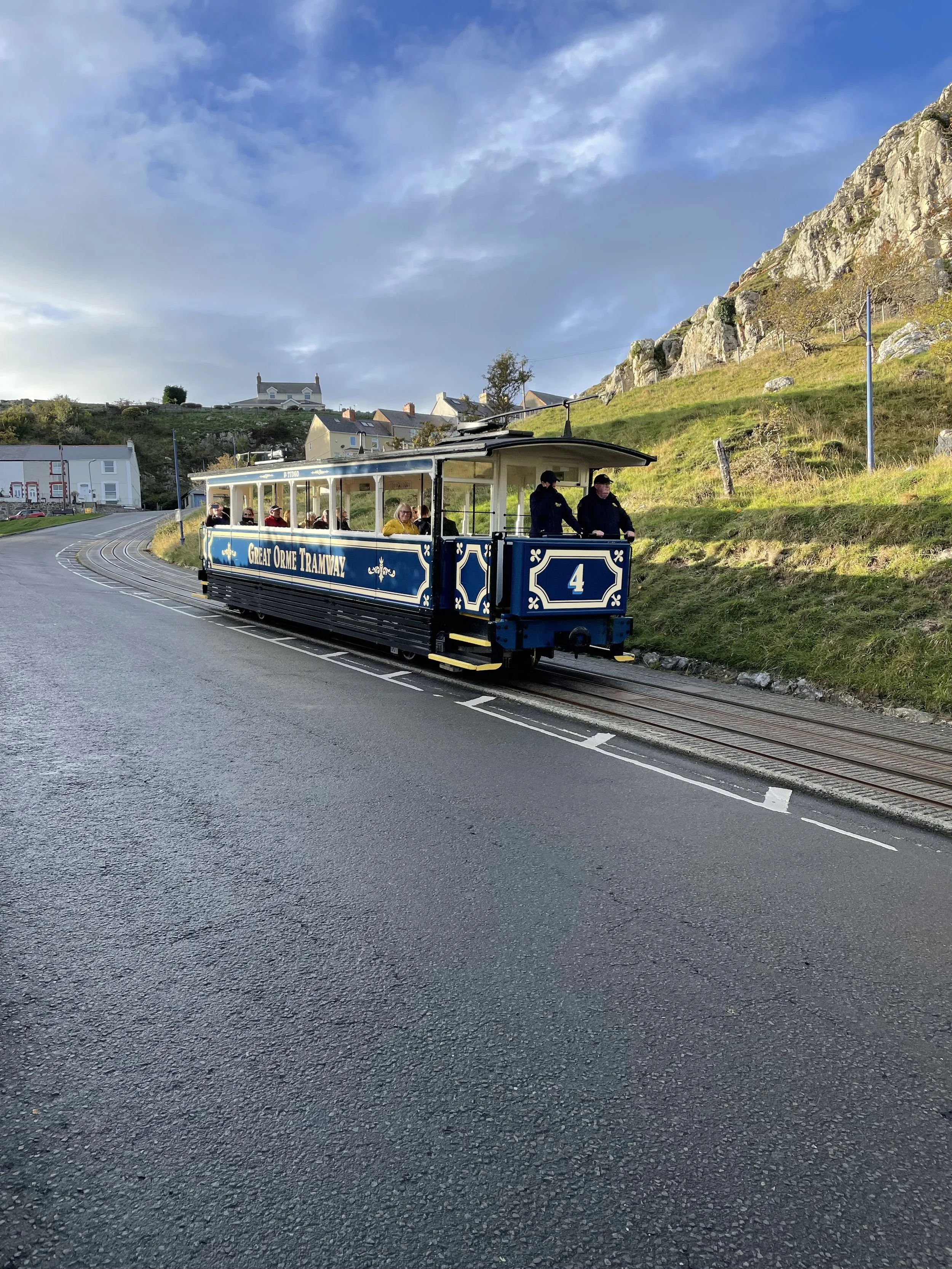
Riding a bicycle alongside it somehow emphasizes just how steep that hill is. We marveled at the ingenuity of Victorian engineers who solved the problem of getting people and goods up and down a steep hill without resorting to automobiles. In November of 2026 we hope to see how another town, Spoleto in Italy, solved the same challenge in the 21st century.
Why We Remember the Great Orme
Looking back, the actual bicycle ride is only part of what we remember.
We remember the goats smashing their horns together while frozen graupel blew across the hillside.
We remember the churchyard above the sea.
We remember worshiping with a tiny congregation in a church whose roots reach back nearly a millennium and a half.
We remember imagining summer visitors climbing the hill to worship outdoors.
We remember tea and scones beside a toasty wood stove.
We remember the old blue tram rumbling along tracks along a steep Welsh street.
And we both remember riding downhill with Llandudno spread below us and thinking what an extraordinarily lovely place it was.
The Bromptons didn't create any of those things.
They simply gave us a particularly good way to move among them.
We have discovered that’s what these little bicycles are best at.
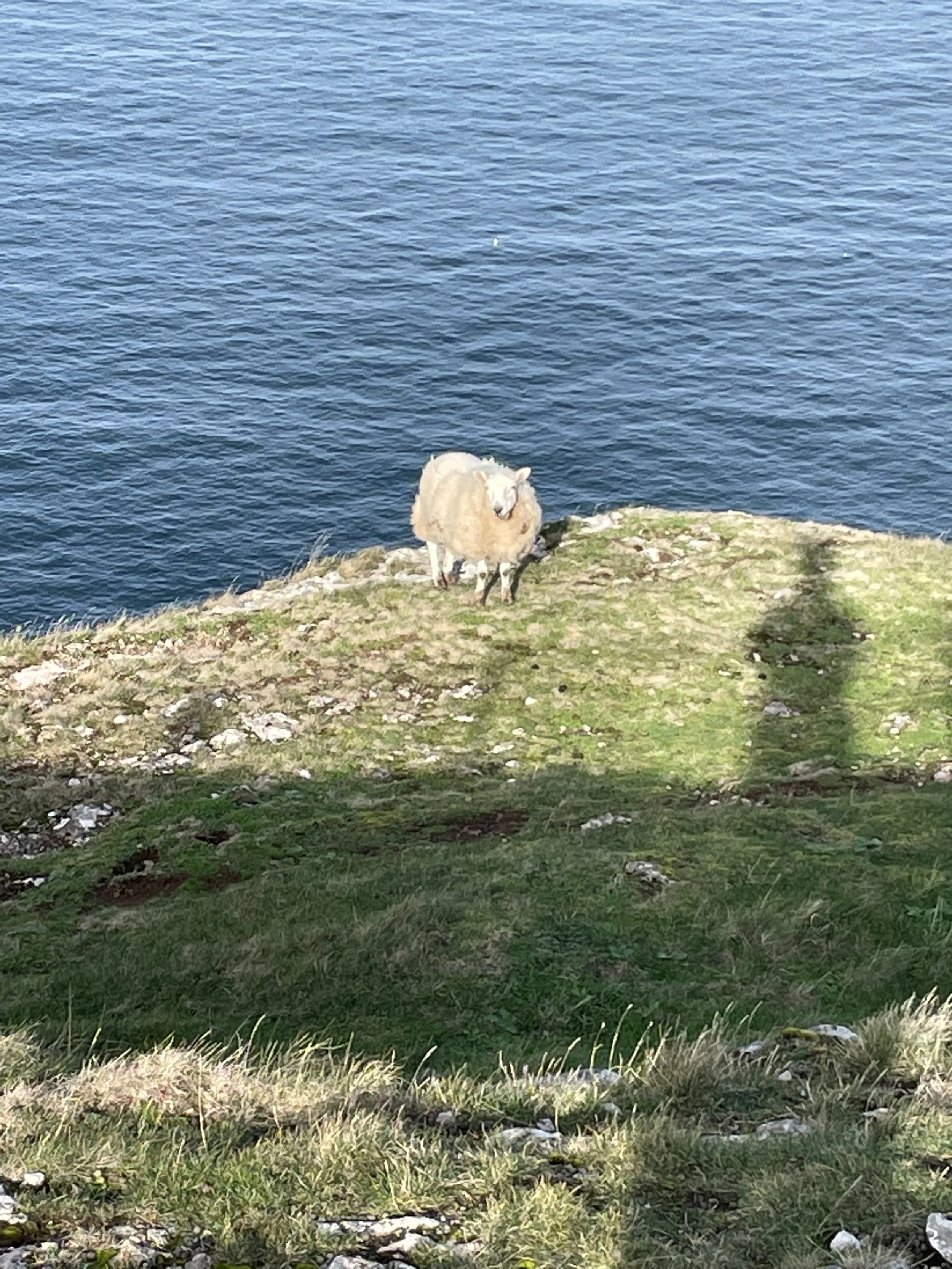
“May I help you?”
The Ride
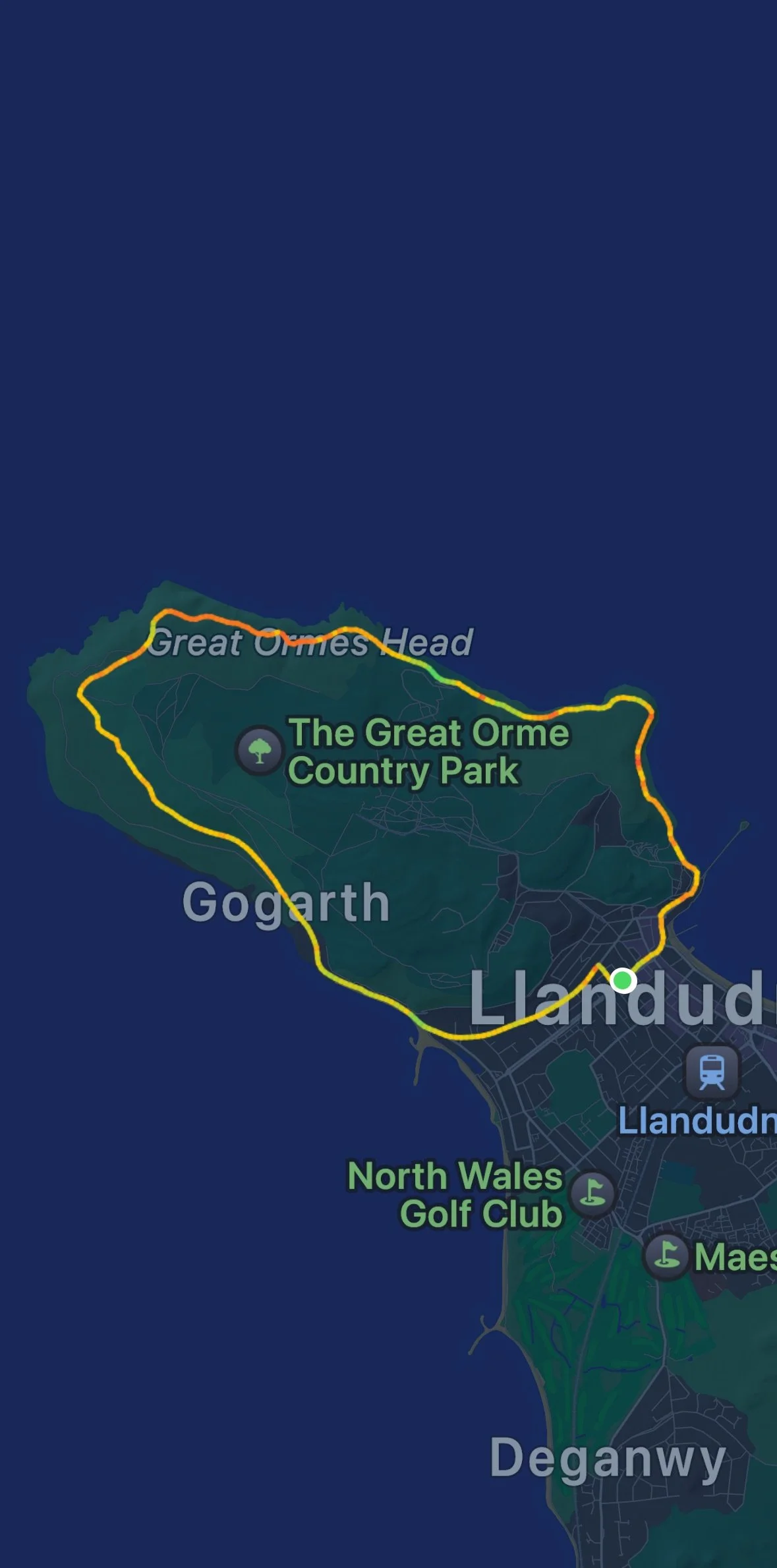
The Route
Distance: about 5–6 miles, depending on exactly where you start and finish in town. Conwy County Borough Council describes Marine Drive itself as a five-mile road around the Great Orme. The route is paved throughout.
Climbing: there is a real climb out of Llandudno, followed by rolling riding around the headland and a satisfying descent back into town. The Great Orme rises to roughly 679 feet above sea level, but this route circles the headland rather than going to the summit.
Conditions: the road is shared with vehicles, narrow in places, and very exposed to wind and Welsh weather. This is not a ride to hurry. Frequent stops for the views are part of the point.
What we liked
Almost everything. The ride packs an extraordinary amount into a very small area: steep green slopes, pale limestone, huge sea views, goats, the old tramway, and Llandudno spread out below.
The Bromptons were especially well suited to it. The loop is short enough to feel approachable, but the climb and the exposed road make it feel like a real ride.
And the tea room, with hot tea, scones, and a wood-burning stove, may be one of the best bicycle rest stops we have ever found.
What we would do differently
Very little. We would allow plenty of time, bring layers even if Llandudno feels mild, and avoid treating the loop as something to knock out quickly. The best parts were the stops, the views, and the chance to wander through the landscape rather than simply circle it.
If the weather were very windy or wet, we would be cautious about the exposed sections and the descent. Otherwise, we would happily do this ride again exactly as we did it — with frequent scenery stops and a delightfully long tea break.
References & Links
Conwy County Borough Council - Discover the Great Orme
Geology of the Great Orme; Carboniferous limestone; landscape and natural history. https://www.conwy.gov.uk/en/Resident/Leisure-sport-and-health/Coast-and-Countryside/Assets/documents/Discover-the-Great-Orme.pdf
Conwy County Borough Council - Great Orme Historical Trail
Additional official background on the headland, geology and historic landscape. https://www.conwy.gov.uk/en/Resident/Leisure-sport-and-health/Coast-and-Countryside/Assets/documents/Great-Orme-historical-trail.pdf
St. Tudno's Church / Bro Tudno
Current worship information and the tradition of weekly summer outdoor services dating to at least 1857. https://www.brotudno.org.uk/st/
Cadw - Outdoor Pulpit at St. Tudno's Church, Listed Building Report
Official record dating the outdoor pulpit to about 1912 and stating that it was built to accommodate large crowds at summer outdoor services. https://cadwpublic-api.azurewebsites.net/reports/listedbuilding/FullReport?id=25270
Great Orme Tramway - Official Site
Official description of the tramway as Britain's only funicular/cable-hauled tramway operating on public roads. https://greatormetramway.co.uk/
Great Orme Tramway - History
Timeline: lower section opened to paying passengers in 1902; upper section opened in 1903; original purpose included passengers, goods and parcels. https://greatormetramway.co.uk/en/history
Elm Tree Hotel - Llandudno Victorian Tourism
Local-history account of Llandudno's development as a Victorian seaside resort: seaside holidays became popular with ordinary city dwellers seeking cleaner air, and the railway's arrival in 1858 brought large crowds of visitors from all backgrounds. https://www.elmtreehotel.co.uk/llandudno-victorian-tourism/