Kagoshima & Sakurajima
Kagoshima Prefecture, Japan
March 2024 & March 2025
We have
Our First Visit — March 2024
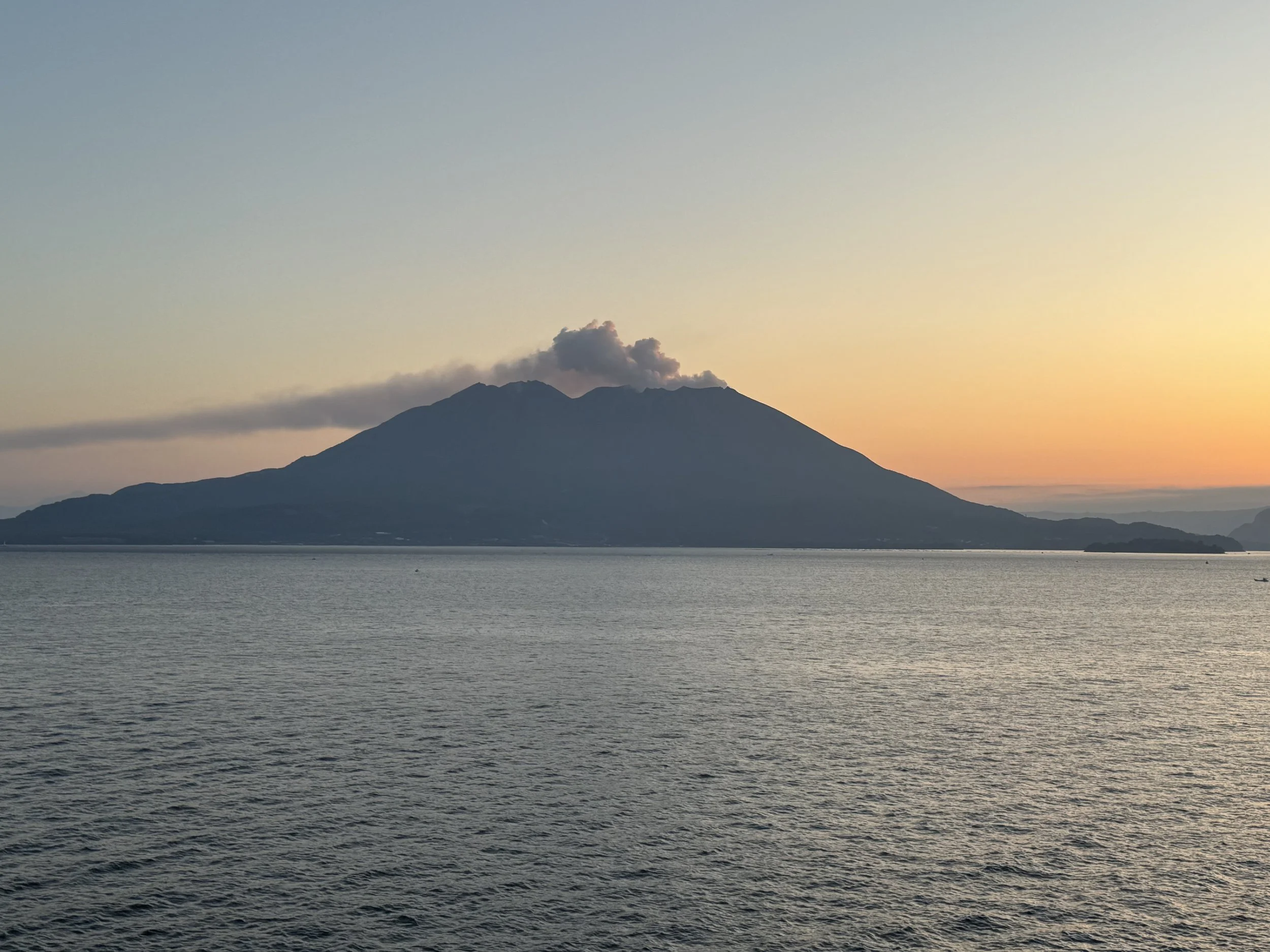
We sailed into Kagoshima Bay at dawn, with Sakurajima silhouetted against an orange sky and a long plume of ash streaming from the crater. It was one of those arrivals when you are very glad you got out of bed early.
Then we went for a bike ride.
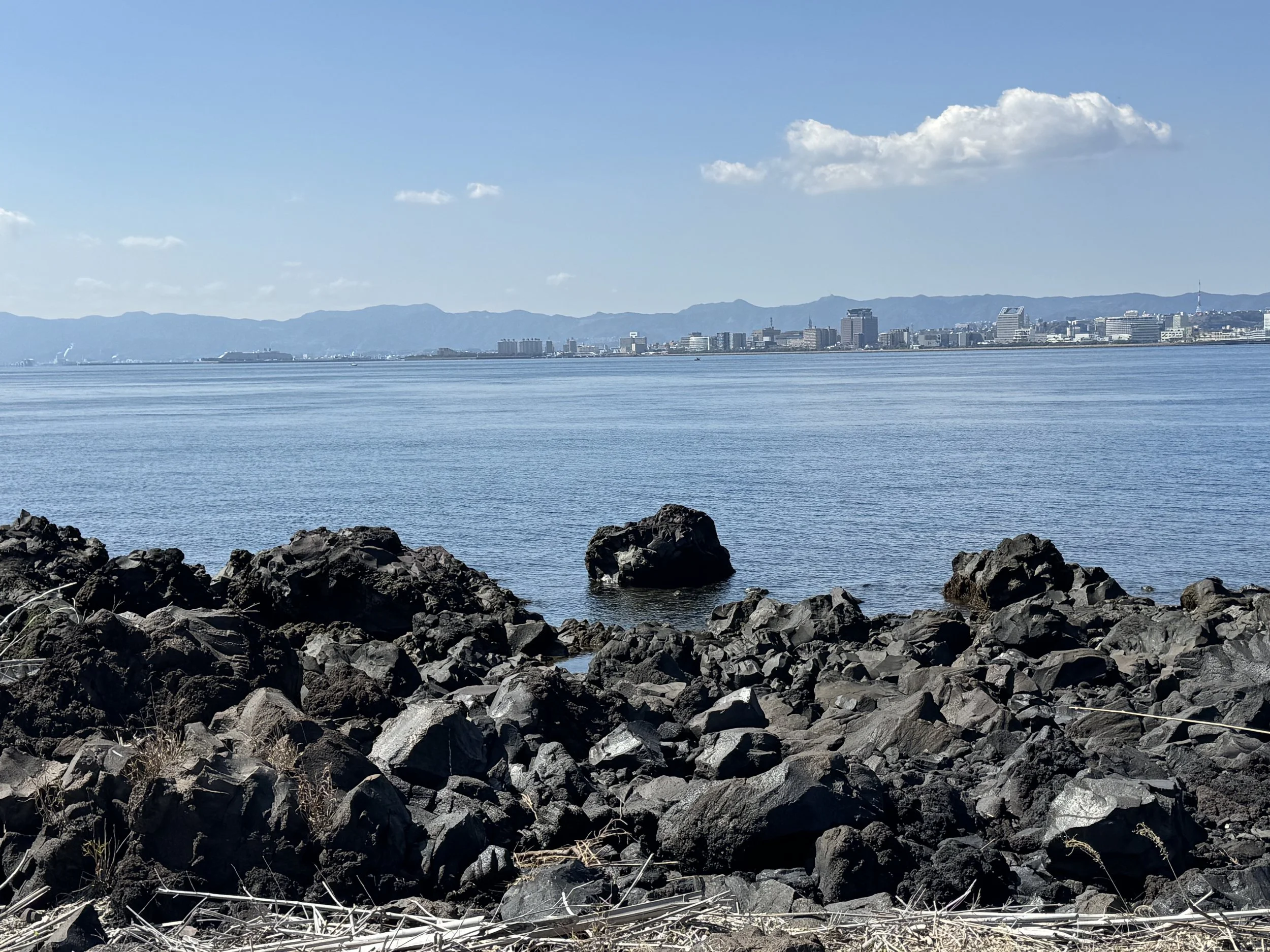
And as we sailed away, Sakurajima was still there in the late afternoon light, ash wafting from the crater.
Our Second Visit — March 2025
Almost exactly a year later, we arrived back in Kagoshima, this time aboard Holland America’s Noordam.
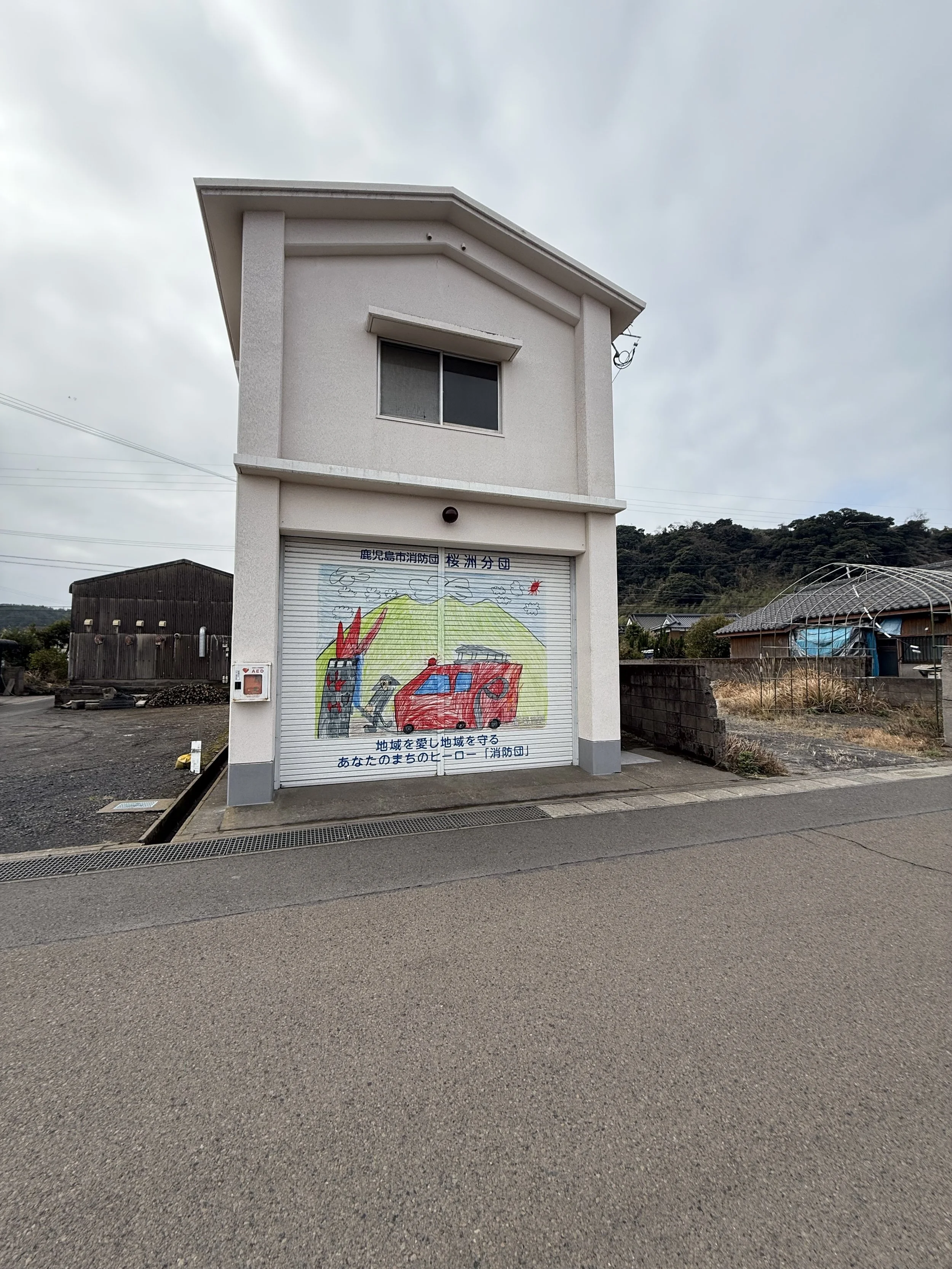
We came across several fire stations as we rode, and some had their garage doors covered with wonderful artwork drawn by local schoolchildren.
At some point we entertained the idea that perhaps we could ride the Bromptons farther up Sakurajima toward the observation area up the side of the volcano, as high as the general public is normally allowed.
YUNOHIRA OBSERVATORY
1,224 ft / 373 m above sea level
*** 5.1km climb *** 6.4% average grade *** 14% maximum grade ***
We could not.
It was charming, but it also said something about the place. Even the children grow up knowing that the volcano, fires and emergency preparation are part of everyday life.
One showed a fire engine, Sakurajima brooding in the background, and a slightly alarmed firefighter confronting a blaze.
This was where the ride became really interesting.
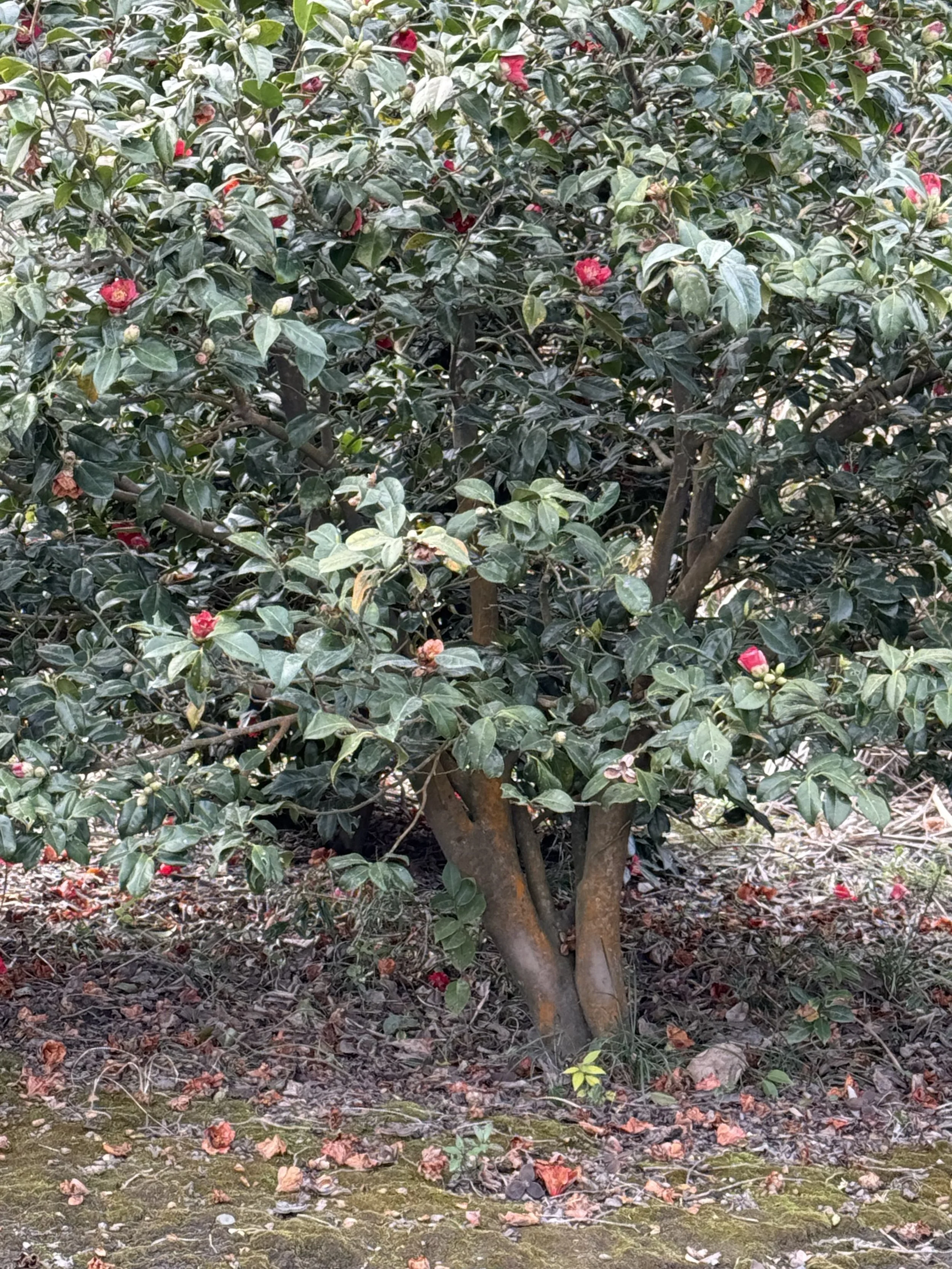
We rode past citrus trees, flowering camellias, gardens and cultivated fields, all growing in soil dusted with volcanic ash.
That was another surprise about Sakurajima. You might expect the landscape around an active volcano to look harsh and barren. Instead, much of it is intensely green and fertile, even in March. The ash is everywhere, but so are farms and gardens.
We traveled to Japan three years in a row, in the spring, and happened upon many different examples of disaster planning. It was all so interesting that we made a separate presentation.
At Oshu Elementary School, for example, a large sign identifies the school grounds as a designated emergency evacuation area. Nearby, another sign marks an emergency water-supply location.
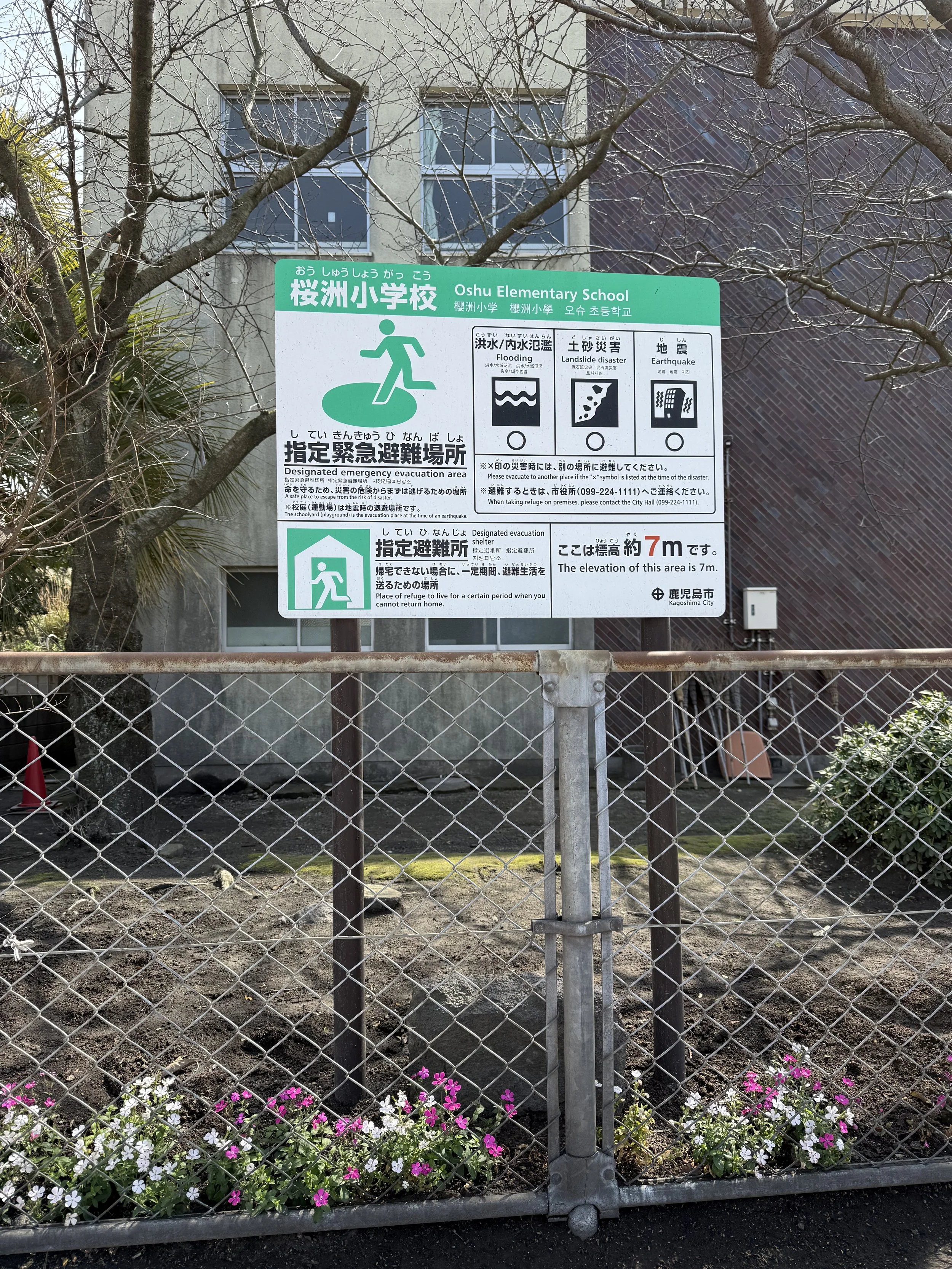
It is one thing to read about living beside an active volcano in a visitor center. Riding through the neighborhoods makes it much more real.
Google Maps worked extremely well, which gave us the confidence to wander without worrying too much about getting lost.
By then we had spent two visits being fascinated by the extraordinary amount of preparation that goes into living beside an active volcano, so happening upon an actual training exercise felt like seeing another piece of the same story.
This time, instead of folding the bikes and taking the shuttle from the ferry terminal back to the cruise port, we decided to ride the approximately 6.6 miles back to the Noordam.
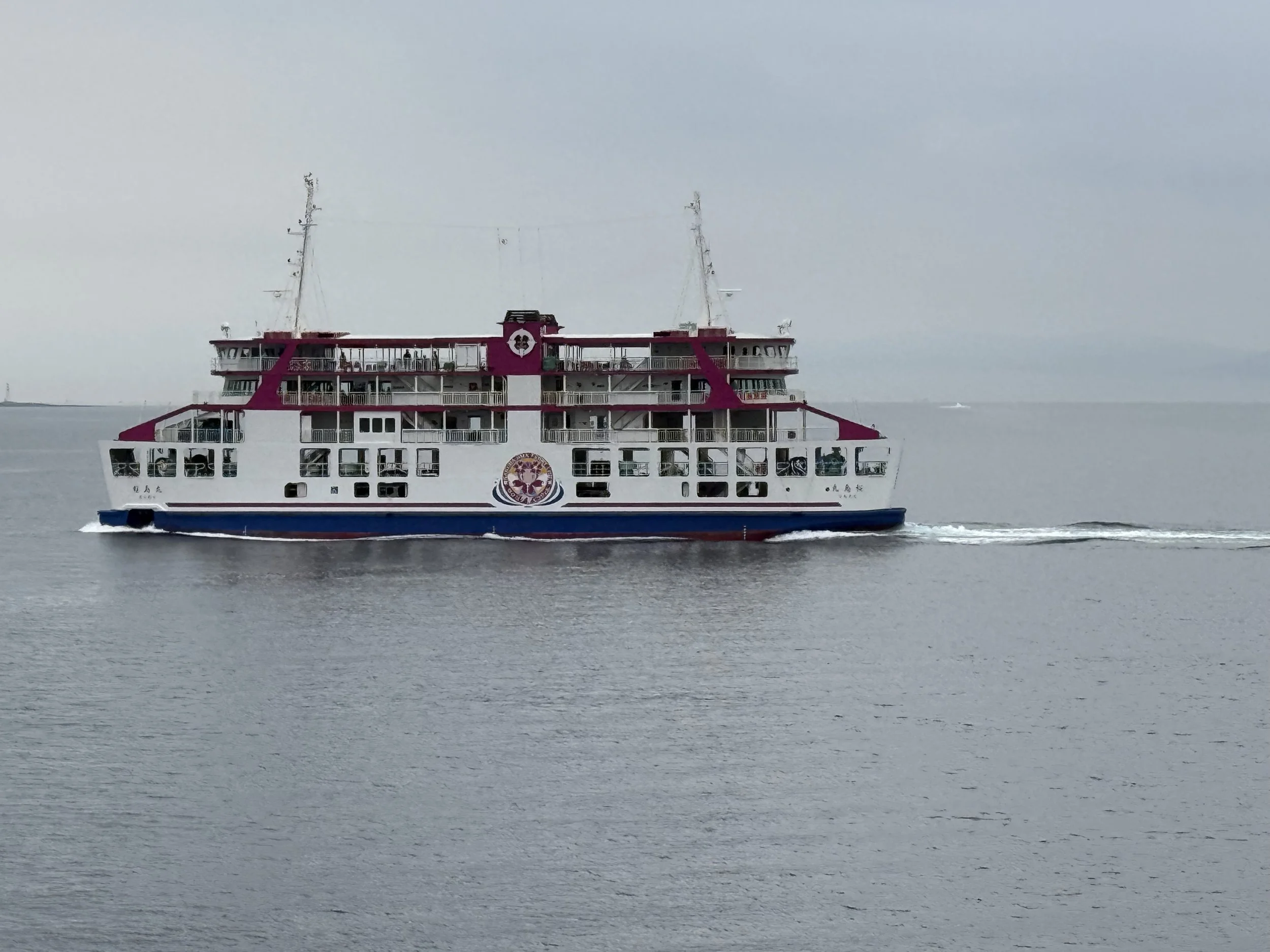
On our way back we came across a Kagoshima fire-service training facility while firefighters were actively training. There were fire engines and rescue vehicles lined up outside, and we stopped with the bikes to watch.
We met a man there who, as best we understood it, was the director of the fire department’s band.
It was such an unexpectedly perfect ending to the day.
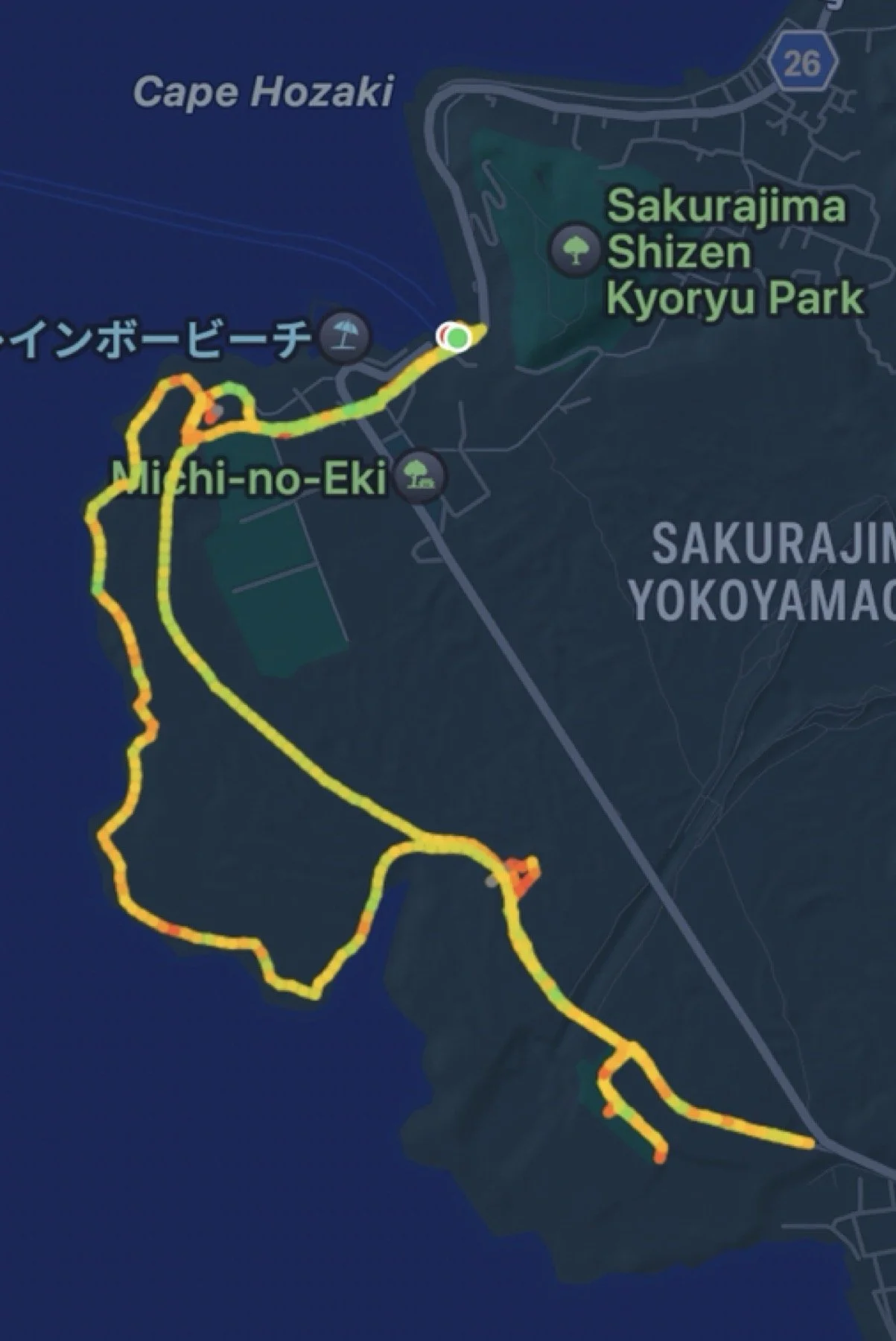
The ride
March 2024: About 6.1 miles, riding east from the Sakurajima ferry terminal along the coast and returning.
What We Liked
Almost everything.
We loved riding on an active volcano, learning about the extraordinary amount of disaster planning that goes into living there, wandering through the quiet agricultural areas, watching the bicycle race, soaking our feet afterward, and repeatedly encountering people who went out of their way to help us.
Sakurajima is also one of those places where bicycles let us see things we probably never would have noticed from a tour bus — little fire stations, farm lanes, ash-covered fields, evacuation infrastructure and debris-control structures tucked into the landscape.
And the Visitor Center has one of the better gift shops we have encountered.
Volcanic-ash-dyed socks are hard to beat.
What We Would Do Differently
We have now established this beyond reasonable doubt: we are not riding our Bromptons up Sakurajima to the observation station.
The volcano is just too steep.
Next time, we would still bring the bikes, because the riding around the lower parts of Sakurajima is terrific. But we would use the sightseeing bus that circles the area and stops at the observation point to get higher up the mountain.
There is no particular prize for proving that two people in their sixties can push folding bicycles up a volcano. Although the lack of a prize has never stopped us before.